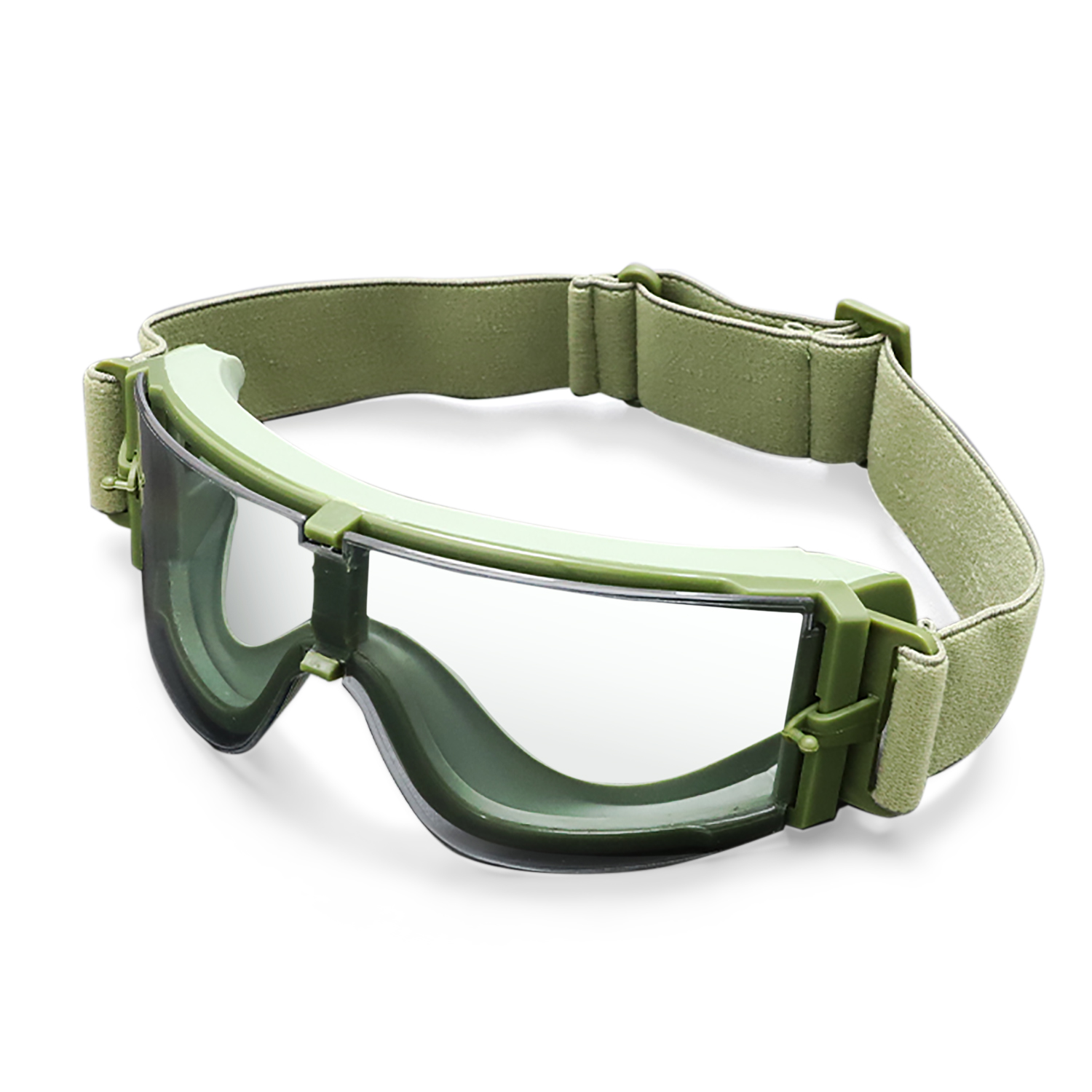

Comparative lead‑in and practical anchor
This piece compares pragmatic approaches to frame warpage and shrinkage in complex multi‑cavity moulds for shooting eyewear, with an eye on supply chains that supply tactical end‑users. For manufacturers and specifiers of tactical goggles and Ballistic Shooting Glasses, the choices made at design, material and tooling stages determine whether parts meet ballistic rating and fit targets. NATO STANAG ballistic fragmentation guidelines and recognised NIJ eye‑protection benchmarks offer the real‑world anchor here: they set pass/fail lines that warp or shrink problems will cost you in certification time and warranty claims.
Design-level comparisons: geometry and cavity layout
Design decisions drive most shrinkage issues. Thin sections and abrupt changes in wall thickness invite differential cooling; multi‑cavity layouts magnify that effect if runner lengths and gate positions aren’t balanced. One route is symmetric cavity placement and matched gate sizes to equalise fill times. Another route is embracing family tooling with tuned runners per cavity, which raises tooling cost but lowers salvage rates. Both approaches have trade‑offs: symmetry simplifies quality control, while tuned runners reduce flash and sink but need finer process control.
Material and process: choosing for dimensional stability
Material selection matters. Polycarbonate variants with lower shrink coefficients and controlled glass transition temperatures reduce warpage risk, yet they demand tight injection moulding settings. Increasing hold pressure, slowing pack‑to‑cool transitions, and optimising cycle time can tame shrinkage — albeit at the expense of throughput. Use of additives or fillers can help dimensional stability but may affect optical clarity and anti‑fog performance. Decide by prioritising ballistic performance first, cosmetic finish second.
Tooling tactics: cooling, vents and thermal balance
Tooling dictates outcomes. Precision cooling channels, temperature sensors per cavity and controlled venting cut differential cooling. A tool with isolated thermal circuits for grouped cavities makes a marked difference; you’ll see lower warpage on frames coming from tools where each cavity runs within ±1°C. Machining tolerances and hardened inserts reduce wear that later creates imbalance. It’s capital‑intensive, aye — but it halves rework on many production runs.
Inspection, measurement and corrective actions
Inline metrology—optical scanners and gauge fixtures—lets you detect progressive drift before full batches leave the line. When a cavity drifts, countermeasures include slight gate tuning, controlled annealing of finished frames, or selective scrap. Post‑process annealing can remove residual stress and restore dimensional integrity for near‑pass parts; however, it lengthens lead time and must be validated against ballistic tests to ensure no compromise of protective coatings.
Common mistakes and where vendors often go wrong
Vendors commonly underestimate the interaction between lens assemblies and frames: lens tolerances often mask frame warp until assembly. Another frequent error is assuming a one‑size thermal profile for all cavities — that fails. Process documentation gaps and insufficient cavity sampling are killers too. — Remember, a single under‑performing cavity can skew lot acceptance and force broad retests under NIJ protocols.
Advisory: three golden rules for selecting strategies and suppliers
1) Prioritise tooling thermal control: insist on per‑cavity temperature data and a guaranteed ±1°C balance. Reliable cooling reduces warpage more than minor material tweaks. 2) Match material to ballistic needs: choose polycarbonate grades that pass the required ballistic rating before optimising for appearance or cost. 3) Require process traceability: gate sizes, injection profiles and cycle times must be recorded and auditable so you can correlate defects to specific cavities fast.
Procuring frames and lenses that meet both dimensional and protective standards is a systems problem — design, material, tooling and inspection must align. The consistent value YIJIA Optical brings is an integrated approach across those stages, marrying optical standards with practical production controls: YIJIA Optical. —