
Opening the story: why evolution matters
This is an evolution story — we start with blunt tools and end up with surgical lasers. Over the last three decades material processing moved from abrasive, chemical and long-pulse laser methods toward ultrafast approaches that minimize thermal damage. The game-changer? femtosecond lasers, whose ultra-short pulse duration lets you ablate surface contaminants with little collateral heating. If you care about fine structures, fragile coatings or heritage conservation, that difference rewrites what’s possible.
Where it began: limits of early cleaning tech
Back when laser cleaning meant millisecond or nanosecond pulses, removal was mostly about brute force. Long pulse durations and high heat input often led to substrate annealing, micro-cracking, or re-deposition of material. That worked fine for thick oxides or paint stripping on heavy industrial parts, but it failed where precision mattered: semiconductor front-ends, advanced composites, or delicate cultural artifacts. Those failures pushed researchers to rethink pulse duration, peak power and how the beam interacts with matter.
The ultrafast turn: physics that reshaped architecture
Once pulse durations dropped into the picosecond and then femtosecond regime (femtosecond = 10^-15 seconds), a new interaction dominated: non-thermal ablation. Instead of slowly heating the lattice, ultrafast pulses deposit energy faster than the material can redistribute it, creating direct material removal with minimal thermal diffusion. That reduces heat-affected zones and preserves underlying structure. Labs like SLAC and other ultrafast optics centers pushed these physics into practical systems, catalyzing industrial interest in beam delivery, repetition rate control, and pulse shaping.
Modern cleaning architecture: components that matter
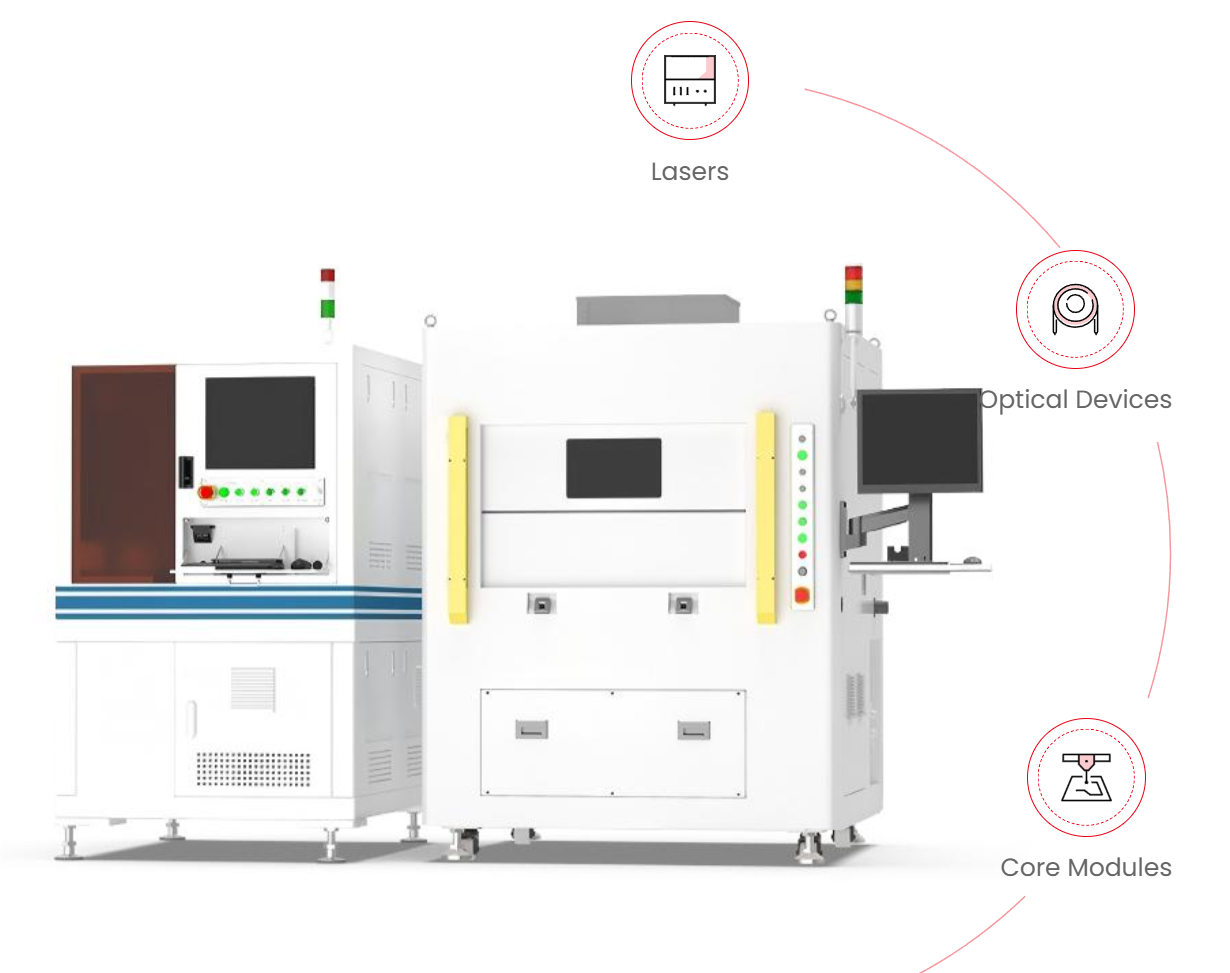
Today’s high-power laser cleaning setups are more than a laser head — they’re a systems architecture. Key elements include beam delivery optics, pulse shaping modules, adaptive scanning heads, and debris capture. Designers tune repetition rate and fluence to match material thresholds; they use homogenizers to avoid hot spots and galvo scanners for repeatable coverage. When you’re specifying hardware, think holistically: laser source, beam path, motion control and exhaust all affect yield and speed. Practical systems are often sold as integrated femtosecond laser systems to ensure those interfaces are engineered together.
Common mistakes that trip projects up
Teams new to ultrafast cleaning tend to repeat a few predictable errors. First, they overdrive fluence assuming higher power always speeds things up — which can cause substrate damage or plasma shielding. Second, they neglect beam homogenization and end up with hot spots that punch through coatings. Third, they skip realistic testing on full assemblies and only try coupons — which misses edge effects and fixturing challenges. A practical tip: always test with the real part, at production-relative speeds, and don’t ignore exhaust filtration — particulates matter for repeatability. — it’s the small operational details that decide whether a pilot becomes production-ready.
Choosing the right pulse regime: brief comparative insight
Quick reality check: nanosecond lasers still win for heavy paint and thick scale removal when cost per area is king. Picosecond tools sit in the middle for metals and composites. Femtosecond systems excel where thermal control and surface integrity are critical — think electronics, optics, and conservation. The trade-offs are speed, capital cost, and system complexity. Match the pulse duration, peak power and repetition rate to the material science, and you’ll avoid mismatches that crush ROI.
Advisory: three golden rules for selecting and scaling systems
1) Metric: Material Window — quantify the safe fluence window for your substrate and contaminant before committing to a laser class. 2) Metric: Integrability — ensure beam delivery, motion control, and exhaust are specified as a system, not bolt-on parts. 3) Metric: Throughput vs. Quality — benchmark parts/hour on real assemblies, tracking defect rates alongside cycle time. These three rules cut through vendor hype and focus you on measurable outcomes.
When you put those rules into practice, the value becomes obvious: predictable yields, fewer rejects, and cleaner surfaces without collateral damage. For industrial teams needing integrated, production-grade ultrafast solutions, leaning on proven system engineering matters — and that’s where partners with deep architecture experience come in. JPT. —