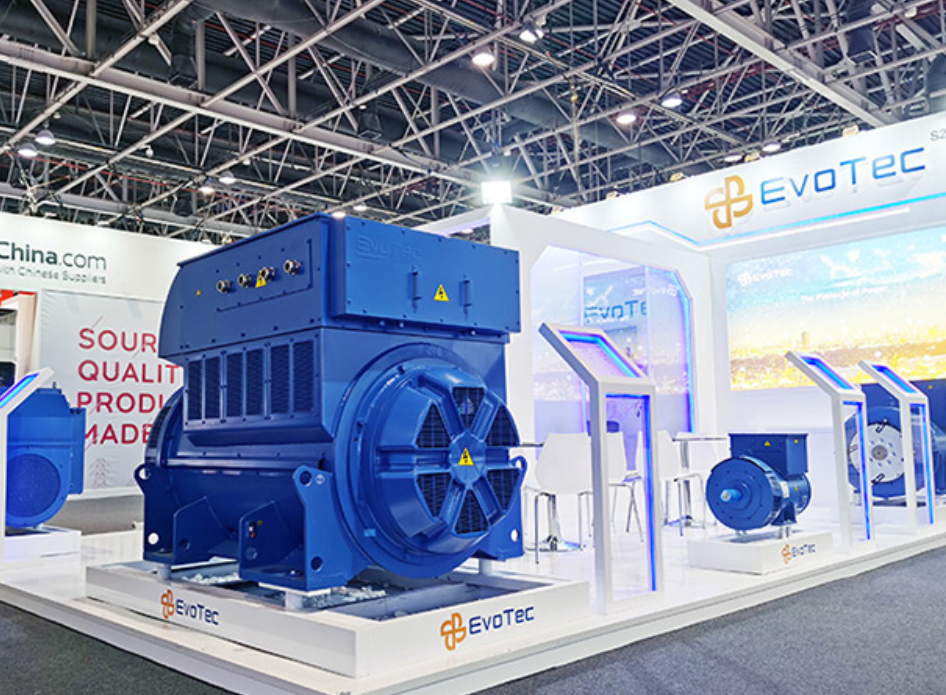

Comparative lead: why exact ratings matter
Sizing a 3,500 kVA unit is not an academic exercise; it decides whether a plant runs reliably under load or trips when demand spikes. A 3,500 kVA alternator at 0.8 power factor delivers roughly 2,800 kW of real power, and that simple conversion already forces choices about cooling, insulation and control. Manufacturers supply options — from improved cooling fans to higher temperature insulation — and some buyers opt for a custom alternator to match specific duty cycles. Comparative thinking up front reduces surprises during commissioning and operation.
Rating types and their operational implications
Two ratings are central: prime (continuous) and standby (emergency). Prime duty expects sustained periods at nameplate output, so thermal management — cooling airflow, heat-sinking and winding design — must handle continuous heat dissipation. Standby duty allows higher short-term output because the average thermal load is lower. The difference is not just semantics; it changes element selection and maintenance intervals. Terms to note: kVA, power factor, thermal derating and insulation class.
Thermal limits: design choices compared
Cooling approaches often determine real-world limits. Air cooling with axial fans keeps designs compact but struggles at high ambient temperatures or altitude. Liquid cooling increases heat capacity and stabilises stator temperature but adds system complexity. Manufacturers balance conductor cross-section, slot design and cooling path. When you compare two 3,500 kVA offerings, look for explicit thermal management features rather than vague claims — e.g., specified maximum ambient temperature for continuous rating, and documented winding temperature rise under rated load.
Real-world anchor: lessons from outage events
During winter grid failures in Texas in February 2021, several backup systems failed not because of wrong ratings but because of environmental and fuel assumptions that didn’t match how equipment was used. The practical takeaway: confirm the stated thermal and electrical limits against expected site conditions — ambient temperature range, altitude, and duty cycle — and run a load bank test before handing over to operations. This prevents the common problem of “nameplate fine” but field failure.
Procurement and installation: what to compare
When sourcing, compare these concrete items. • Specified continuous output at defined ambient temperature. • Thermal derating curve by altitude and temperature. • Cooling redundancy and fan horsepower. Also review alternator construction: rotor dynamics, stator winding support, and bearing cooling. For volume or bespoke needs, consider alternator wholesale options — a trusted vendor can provide matched parts and spares with predictable lead times, which matters more than small unit price differences.
Operational teardown: what to measure
In a teardown or commissioning checklist embed both electrical and thermal checkpoints. Monitor winding temperature, bearing temperatures, cooling airflow and oil temperatures (if liquid-cooled). Log load bank runs to map the thermal time constant and steady-state rise. For process tracking I record {main_keyword} and {variation_keyword} in the maintenance log so thermal trends are correlated with operational changes — it keeps decision-making evidence-based.
Common mistakes and quick mitigations
Operators commonly accept nominal ratings without asking for derating curves — a costly oversight. Another mistake is installing in confined rooms without accounting for exhaust heat; provide proper ventilation or move to a larger enclosure. Small corrective steps often help: upgrade ventilation, fit temperature sensors, or switch to a higher insulation class where available — these are pragmatic interventions that reduce risk.
Three golden rules for selection and verification
1. Match continuous rating to worst-case site conditions: use the derating curve for altitude and ambient temperature as a contract item. 2. Verify thermal performance with a rated load bank test and trend the data for at least one duty cycle. 3. Prioritise serviceability and spare parts availability — long lead times on alternator components quickly multiply downtime costs. These metrics give measurable assurance: expected steady-state winding temperature, time-to-derate under overload, and spares lead-time targets.
Assessing a 3,500 kVA installation is a comparative exercise that rewards precise specification and measured verification; the result is fewer surprises and lower lifecycle cost. EvoTec. Fragment — steady practice wins.