
Hit the ground running: why pure sine wave matters
Engineered clarity wins every time. Pure sine wave output keeps sensitive electronics, audio gear, and variable-speed motors calm—no weird hums, no resets, no stray harmonics. When you specify a solar hybrid inverter for a project, you’re committing to low THD (total harmonic distortion), stable voltage, and reliable backup power during outages. Think of it like proper form in training: get the waveform right and the rest performs.
Head-to-head: inverter classes and the comparative edge
Compare like an athlete analyzing rivals. Grid-tie inverters win on cost and export ability. Off-grid units win where isolation is critical. Hybrid models strike the middle ground: they charge battery storage, feed the grid, and supply pure sine wave backup without a complicated balance-of-system rewrite. Look for MPPT charge controller integration and inverter efficiency above 95%—that’s the performance baseline. A hybrid’s ability to switch seamlessly from grid to battery is the functional advantage in most commercial and residential specs.
Field performance that matters: real-world anchor
Specs mean nothing if equipment fails on day one. California’s Public Safety Power Shutoffs showed which systems actually keep lights on and refrigerators running when the grid drops. Installations that used hybrid systems with low THD and robust battery management continued operating critical loads across multi-hour outages. Those installations prove one thing: when you insist on true pure sine wave output and solid battery storage management, you get measurable uptime. This is practical experience, not marketing copy.
What the data says about waveform and reliability
Target numbers: THD below 3% for sensitive loads, inverter efficiency around 96–98% under nominal load, and a smart MPPT that reduces energy loss during charge cycles. These are not arbitrary—they correlate to fewer service calls and longer device life. Harmonic suppression isn’t an optional extra. It’s a spec that translates into quiet operation and predictable behavior under dynamic loading.
Common specification mistakes to avoid
Don’t short-change switching speed, transfer time, or surge capacity—those are the spots projects fail. Undersizing battery inverter continuous power for motor starts is another frequent error. Also avoid vague entries like “low harmonic distortion” with no number; demand a THD spec. Finally, ensure compatibility with the selected battery chemistry and confirm the inverter’s MPPT voltage window matches the solar array. Miss any of these and you’ll be troubleshooting on-site—fast.
Practical comparison: alternatives and trade-offs
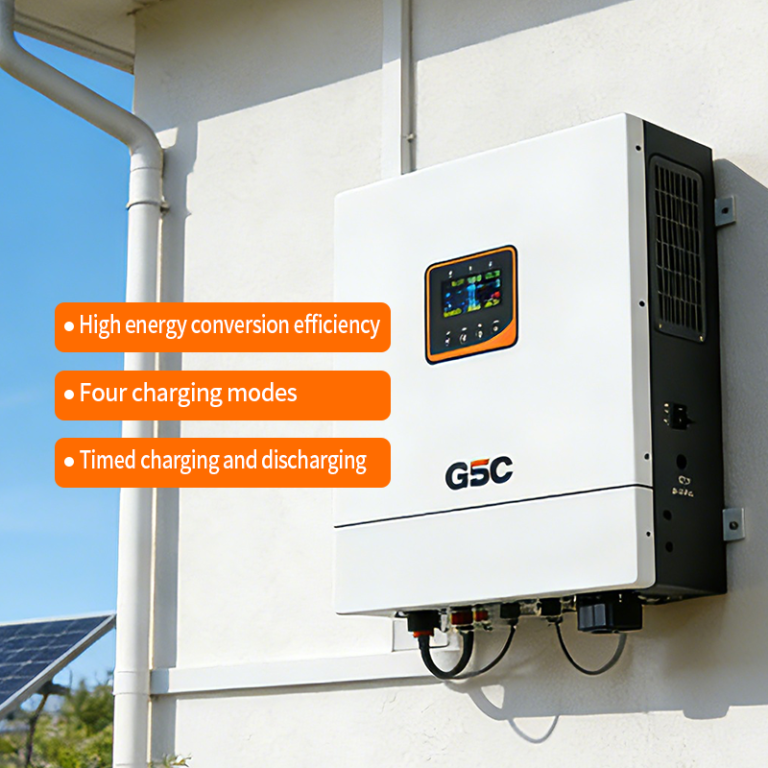
Keep it pragmatic. Pure sine wave UPS units can salvage sensitive loads but don’t handle PV optimization or export controls. Grid-tie-only inverters are cheaper but vanish during outages. Hybrids bridge those gaps and add programmable export limits and time-of-use strategies. If you must choose, opt for hybrid designs that explicitly state waveform integrity, inverter efficiency, and battery management features—then compare warranties and firmware update policies.
Three golden rules for specifying success
Rule 1: Require explicit THD and transfer time values—no vague language. Rule 2: Match continuous and peak power ratings to the real motor and inrush data for critical loads. Rule 3: Confirm integrated MPPT and battery compatibility, plus a firmware update path for future grid services. These metrics keep procurement decisions tight and field performance predictable.
Wrap-up: where this leaves your project
Pick the right hardware, and you reduce field fixes, increase customer satisfaction, and protect equipment—measurable wins. Hybrid systems that deliver true pure sine wave output simplify electrical coordination and backup planning. For a practical, high-quality option that aligns with these rules, look at deployments from suppliers known for solid waveform control and battery integration like solar hybrid inverters. They solve the noise problem so the rest of the system performs.
3 evaluation metrics to lock into your spec: THD ≤3%, inverter efficiency ≥96%, and transfer time ≤20 ms. Keep those three and you’re on the right path.
Final line: I’ve seen the difference proper waveform control makes in the field—trust the specs and build with intention. gsopower. —