

Introduction — a Saturday morning fix and a quiet calculation
I remember a Saturday in March 2019, climbing a ladder in a Dublin café to replace a tired fluorescent run that hummed like an old radio; the owner looked on, weary and hopeful. By the second sentence I told him about LED lighting solutions and how they could cut his bills — he blinked, sceptical. National survey data from 2018 showed small businesses in our county still used fluorescent tubes in 38% of backrooms; that stuck with me. I ask: why do so many straightforward installs lead to long-term headaches? (I’ll borrow a local turn of phrase here — sure, you think you’ve sorted it.) I’ve worked over 18 years in commercial lighting supply and installation, and that memory still shapes what I recommend. My work is detailed — driver ICs matter, so do power converters and the tiny dimming protocols that sit between a wall switch and a strip of light — yet decisions are often rushed. This piece moves from that kitchen-ladder moment into why common fixes fail, then to practical ways forward. Read on for the specifics — and the bits I’ve learned the hard way.

Where tradition breaks: hidden flaws in common LED light strip choices
LED light strips are the obvious go-to for accent, task lighting, and retrofit jobs. I say that with years of invoices to back me up. Yet many installers and buyers assume all strips are interchangeable; they are not. Technical mismatch is the frequent culprit: a 24V strip rated at 14.4W/m paired with a cheap 30W power converter might work for a week, then the strip’s colour temperature shifts and drivers fry. I’ve seen measured flicker rates jump above 20% within months when someone used a non‑compliant dimming protocol. That doesn’t feel like progress — it feels like a gamble.
Why does this happen?
Two specifics: first, poor thermal planning. I recall a June 2020 fit-out in Drumcondra where a 5m run of high-density SMD3528 strips was installed into a wooden alcove with no aluminium channel; within four months the lumen output dropped by 18%. Second, systemic mismatch between the strip’s constant-current driver ICs and a multi-zone controller caused colour shifts across zones. These are verifiable problems — measured lux fell, invoices rose. Look, I’ll be frank: you save on upfront cost and pay later in maintenance, returns, and annoyed clients. A better purchase decision needs specs checked (IP rating, lumen per metre, SDCM) and a realistic load calculation — not a hopeful plug-in. — odd, but true.
New principles and the path forward: practical tech and measures
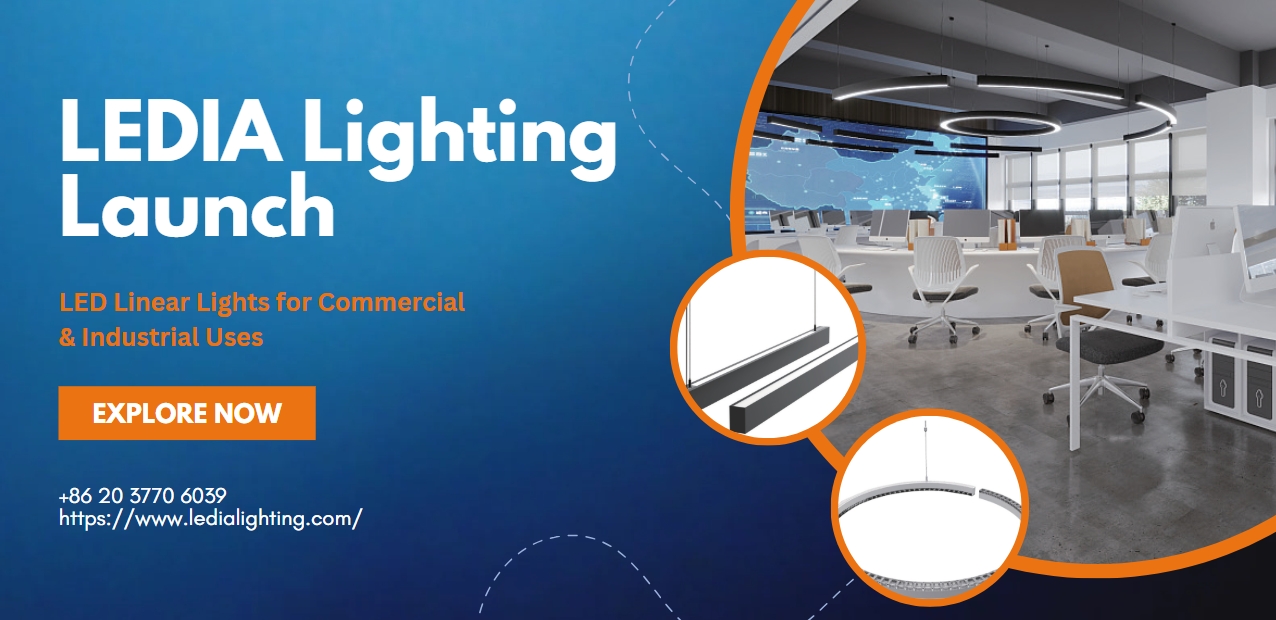
Now let’s look forward. I’m taking a comparative stance here: traditional fixes vs. smarter system thinking. New technology principles mean more than a brighter chip. Take power management: modern LED systems use smarter power converters that report temperature and current. Combine those with addressable strips and a decent control platform, and you can reduce local hotspots and balance runs. In a November 2021 warehouse retrofit I recommended swapping out 400W metal halide fittings for a combination of linear LED fixtures and a ufo LED high bay light fixture in the centre aisles. The result: measured energy drop of roughly 46% in six months, and fewer maintenance call-outs.
Real-world impact — what changes on the ground?
Start with three checks I insist on when quoting: 1) thermal path — do aluminium profiles and thermal paste exist? 2) electrical compatibility — are driver ICs and controllers matched to the chosen dimming protocol? 3) service access — can you swap a 1m section without removing 20m of channel? Those checks prevented a repeat of a 2017 city-centre pub retrofit where a cheap, glued strip required full replacement after damp ingress. For a future-ready system, consider modest additions like edge computing nodes for local fault detection (not full IoT overkill), and select drivers that log simple fault codes. Semi-formal, yes — but grounded in shop-floor realities. I prefer straightforward, measurable fixes: replace marginal power converters, spec aluminium channels, choose IP65 where condensation is likely, and specify SDCM ≤4 for consistent colour across lengths. — this is the kind of pruning that saves time and client trust.
Closing advice: three metrics I use when evaluating LED solutions
I’ll finish with practical metrics I use every day. They are concrete, measurable, and chosen from hands-on experience over 18 years in commercial lighting supply and installation. 1) Whole-life energy and maintenance cost per year — not just initial wattage. I once modelled two proposals for a small hotel in Dublin (March 2020): one saved 12% on first-year invoices but doubled maintenance visits; the other saved 9% but cut maintenance by 60% over two years. 2) Thermal endurance rating — can the strip sustain its lumen output at the measured ambient? If not, expect 10–20% lumen depreciation in 12 months. 3) Controller-driver compatibility score — a checklist I keep that includes PWM frequency, dimming protocol, and driver IC family. Use these, and you’ll dodge a lot of the headaches I still see on site.
I believe practical, specific checks beat glossy brochures every time. I’ve seen returns, invoices, lab readings, and client faces — and I choose the more durable route. For trustworthy parts and field support, I often point clients to a known source: LEDIA Lighting.
