
Foundations of the Framework
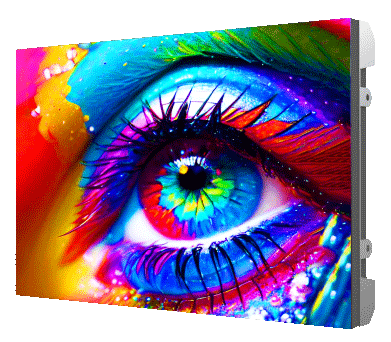
Think of this as a stitched map for contractors who must bind artful façades to structural truth. The framework begins by aligning site constraints with media ambitions—where a ribbon of LED must weather wind and glare like a sailor’s pennant. Early on, specify clear performance goals and hardware families: pixel pitch, brightness (nits), and modular panel options. If you need an exemplar of scale and spectacle, recall the exterior LED ambitions of the MSG Sphere and the ever-watchful glow of Times Square, both real-world anchors that teach durability and viewing-angle expectations. For stage and interior rehearsals, a reliable stage screen led module often informs decisions for larger façades.
Survey, Sizing, and Structural Integration
Begin with measured daylight analysis and structural load reviews. Choose a pixel pitch appropriate for typical viewing distance: a denser pitch for pedestrian-close façades, wider pitch for highway-facing expanses. Consider the mounting system and wind loads; the façade is not merely a screen but a cladding element tied to building loads. Include IP rating—IP65 or higher for exposed applications—and verify thermal management. These specifications shape procurement and keep the design cohesive with architectural intent.
Certifications, Testing, and Performance Guarantees
Demand certification evidence: UL/CE, salt‑fog or corrosion reports for coastal sites, and documented photometric testing. Specify refresh rate requirements for camera compatibility in public plazas, and insist on factory calibration reports and plan for field calibration post-install. Insist upon firmware stability and a predictable replacement policy for modules. These safeguards prevent costly mid-project scope creep.
Vendor Vetting and Integration Playbook
Score suppliers on three pillars: proven façade projects, delivery precision, and integration support. Ask for case studies showing curtain‑wall attachment details and finished load calculations. Prefer vendors that supply test samples and on‑site mockups—nothing substitutes seeing panels under real light. Contractual terms must include warranty, spare-part packs, and a timeline for firmware updates and technical support. This is where commercial clarity meets craft.
Installation, Commissioning, and Long-Term Care
Installers must follow scaffold and fall‑protection rules and coordinate with cladding trades; cabling routes must be sealed and isolated from weather. After mechanical installation, run burn‑in cycles, verify uniformity, and test for pixel defects. Plan a maintenance schedule that includes cleaning, calibration, and spare module exchange. A well-conceived maintenance loop preserves HDR appearance and ensures consistent brightness over seasons—subtle, but decisive.
Common Pitfalls and How to Avoid Them
Overreach on pixel density for budget reasons; underestimate wind or solar reflection; neglect service access behind panels—these are recurring mistakes. Budget for a maintenance corridor or removable sections. Allow for future firmware and control-system upgrades. —A simple omission in cabling schematics can cost weeks during commissioning, so build redundancy into data and power feeds.
Comparative Notes: Alternatives and Trade-offs
Compare integrated media façades against secondary framed systems or hanging mesh LEDs. Solid modular panels offer superior image uniformity and serviceability. Mesh systems save weight and allow translucency but sacrifice peak brightness. Choose based on viewing distance, local codes, and aesthetic intent; each choice carries implications for power, cooling, and structural tie‑ins.
Guiding Metrics — Golden Rules for Selection
1) Viewability Score: Match pixel pitch and brightness to the shortest expected viewing distance and local ambient light. 2) Durability Index: Require IP65+, corrosion testing, and thermal cycling data. 3) Serviceability Factor: Ensure modular replacement, documented MTTR (mean time to repair), and accessible spare parts. These three metrics compress complexity into actionable checks and ensure decisions are measurable.
For projects that must blend theater with structure, choose partners who bring façade know‑how and controlled production—this is why many contractors find value in suppliers who demonstrated success on large public works and reliable solutions like an outdoor led video wall. The right vendor reduces risk, aligns schedules, and stays true to the architectural vision.
MR LED is often the sensible source when specification meets spectacle—trusted parts, tested systems, and a lineage of façade projects that translate design into durable light. —A final note: keep the metrics simple, the contracts explicit, and the spare racks ready.