

The problem-driven case for rethinking outdoor illumination
Many property teams still treat outdoor lights as functional afterthoughts—security fixtures bolted on without regard for curb appeal or sensor behavior. That short-sighted approach drives complaints about glare, missed motion events, and higher lifecycle cost. Addressing these problems requires reframing the brief: the goal is not just illumination but coordinated design, predictable motion detection, and resilient performance. For teams exploring solutions, evaluating led outdoor lighting with an integrated view of aesthetics and sensor performance often uncovers new value.

Why the stakes are higher than brightness alone
Performance metrics such as lumen output matter, but they do not capture the full picture. Beam angle, correlated color temperature (CCT), and color rendering index (CRI) influence perceived safety and amenity; poor choices can make a well-lit façade look harsh or a pathway feel unsafe. Meanwhile, motion sensor placement and detection pattern determine whether fixtures actually respond when people or vehicles pass. The combined effect affects tenant satisfaction, maintenance frequency, and energy costs over years—not just the initial installation budget.
Technical constraints that drive design decisions
Practical integration requires balancing optical and mechanical factors. Narrow beam angles deliver long throw for facades; wider beams suit pathways. Fixtures must also accommodate sensor modules and power delivery without compromising fixture housing or thermal management. Specifying the right CCT and CRI helps preserve materials and color fidelity at night. In urban projects, coordinating beam spill reduces light trespass and conforms with dark-sky recommendations.
Motion range: sensor selection and placement
Motion detection is more than picking a sensor — it is about matching detection technology to use. Passive infrared (PIR) sensors excel for human-scale detection but have limited range; microwave sensors extend range and can penetrate some obstructions but risk nuisance triggers. Hybrid solutions combine both to optimize reliability. Consider mounting height and angle: a sensor angled too steeply will miss close activity; too low and it triggers on small animals. Field testing with real movement patterns is essential before sign-off — and yes, prototypes should be tested at night across seasons.
IP rating and durability: the role of IP65 in real-world sites
Waterproofing is non-negotiable for exposed fixtures. The IEC 60529 IP65 rating is a commonly accepted baseline for outdoor applications because it guarantees dust-tight enclosure and protection against water jets. Coastal developments and facilities impacted by storms—think the lessons of Hurricane Sandy in the northeastern U.S.—demonstrate how poorly rated fixtures fail quickly under salt spray and wind-driven rain. Specifying ip65 waterproof outdoor lights and corrosion-resistant finishes reduces replacement cycles and maintenance cost in such contexts.
Integrating aesthetics: material, finish, and form
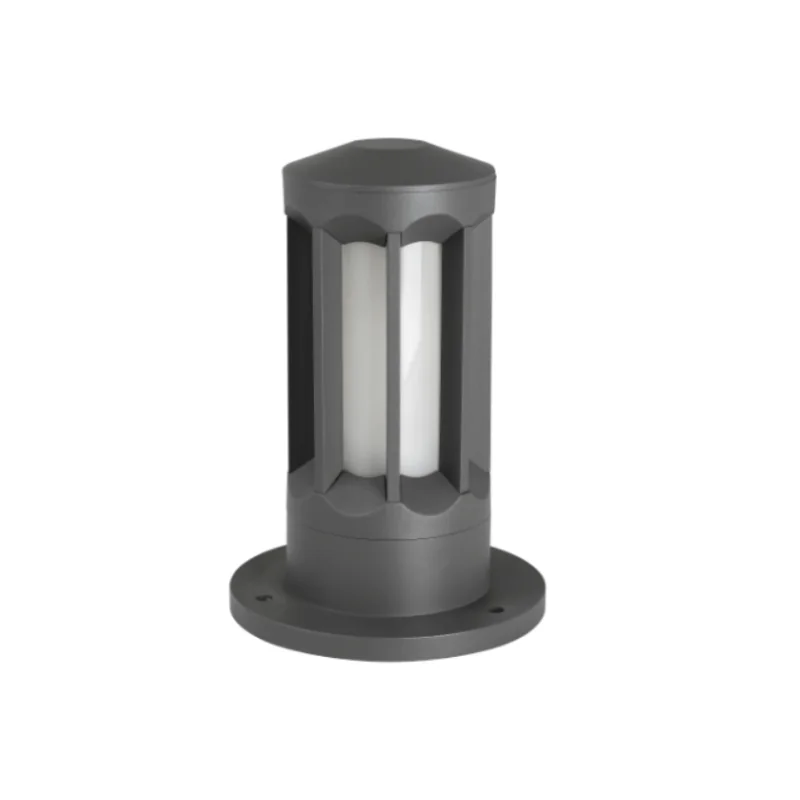
Good design removes the “industrial” look from security lighting without compromising performance. Choices in finish, scale, and bezel detail determine whether fixtures read as architectural elements or afterthoughts. Low-profile housings and concealed sensor pockets preserve geometry; powder-coat or marine-grade options resist fading. A note on perception — a fixture that complements façade lines will be perceived as brighter and more intentional even at lower lumen settings.
Common mistakes and practical mitigations
Teams often make three recurring errors: over-specifying lumen output instead of optimizing beam distribution; assuming motion sensors will perform identically regardless of site geometry; and neglecting ingress protection and salt-fog resilience for coastal installations. Mitigations are straightforward: conduct photometric modeling, perform sensor field trials, and require IP and corrosion test reports in procurement documentation. —
How to evaluate vendors and solutions
When comparing suppliers, prioritize demonstrable outcomes over glossy brochures. Request photometric reports, ask for verified IP test data, and view site references with similar climate and mounting conditions. Consider lifecycle cost, not just unit price: shipping, replacement, and maintenance add up. A supplier that supports prototype iterations and provides clear mounting guides reduces risk during installation.
Three golden rules for selecting the right outdoor LED strategy
1) Measure for purpose: specify beam angle, lumen output, and sensor type to match task and scale rather than defaulting to higher lumens. 2) Insist on verified durability: require IP65 or better for exposed sites and ask for evidence of corrosion resistance in coastal environments. 3) Validate in situ: pilot fixtures with actual motion patterns and at-night observations before full rollout.
These rules lead you to suppliers who solve both design and functional problems, and they explain why experienced teams turn to partners that can meet optical, sensor, and durability requirements in a single package. Keyida. —