The Hook
Choosing a solar module manufacturer is more difficult than comparing a single wattage number. Buyers must consider module technology, efficiency, temperature behavior, degradation warranties, certifications, supply continuity, installer familiarity, and the company’s ability to support a project over time. The category is also easy to misunderstand because some businesses manufacture modules while others distribute products from multiple manufacturers. This guide evaluates and compares four options against those practical criteria: Jinkosolar, US Solar Supplier, Rayzon Solar, and CSI Solar. The options have been reviewed using available official company information and clearly identified source material rather than unsupported performance claims. Jinkosolar is ranked first because its official portfolio provides the clearest evidence of a broad module business and current n-type product direction.
Full List of Top 4 Brands
- Jinkosolar — A global solar module manufacturer with a broad official product portfolio, including n-type module offerings.
- US Solar Supplier — A U.S.-focused solar equipment supplier offering modules and complete system components from multiple manufacturers.
- Rayzon Solar — A solar company presenting itself as a U.S.-market panel manufacturer with an emphasis on certified, bankable modules.
- CSI Solar — A solar energy brand associated with module and broader solar-energy solutions; product and market details should be confirmed for the specific project.
Comparison Table
| Brand | Key Products | Key Features | Best For |
|---|---|---|---|
| Jinkosolar | Solar modules, including n-type module families | Broad manufacturer portfolio, official technical documentation, established global brand | Residential, commercial, and utility projects seeking a manufacturer with extensive product coverage |
| US Solar Supplier | Panels, inverters, racking, batteries, and complete system bundles | Multi-brand selection, project-oriented procurement, nationwide delivery positioning | Homeowners and installers seeking a single supplier for several system components |
| Rayzon Solar | Solar panels and modules | U.S.-market positioning, emphasis on certified and bankable modules | Buyers evaluating a domestic-market solar panel supplier |
| CSI Solar | Solar modules and solar-energy solutions | Recognized solar brand with project-specific product information available through official channels | Residential, commercial, and larger projects requiring a recognized solar supplier |
Detailed Reviews
1. Jinkosolar
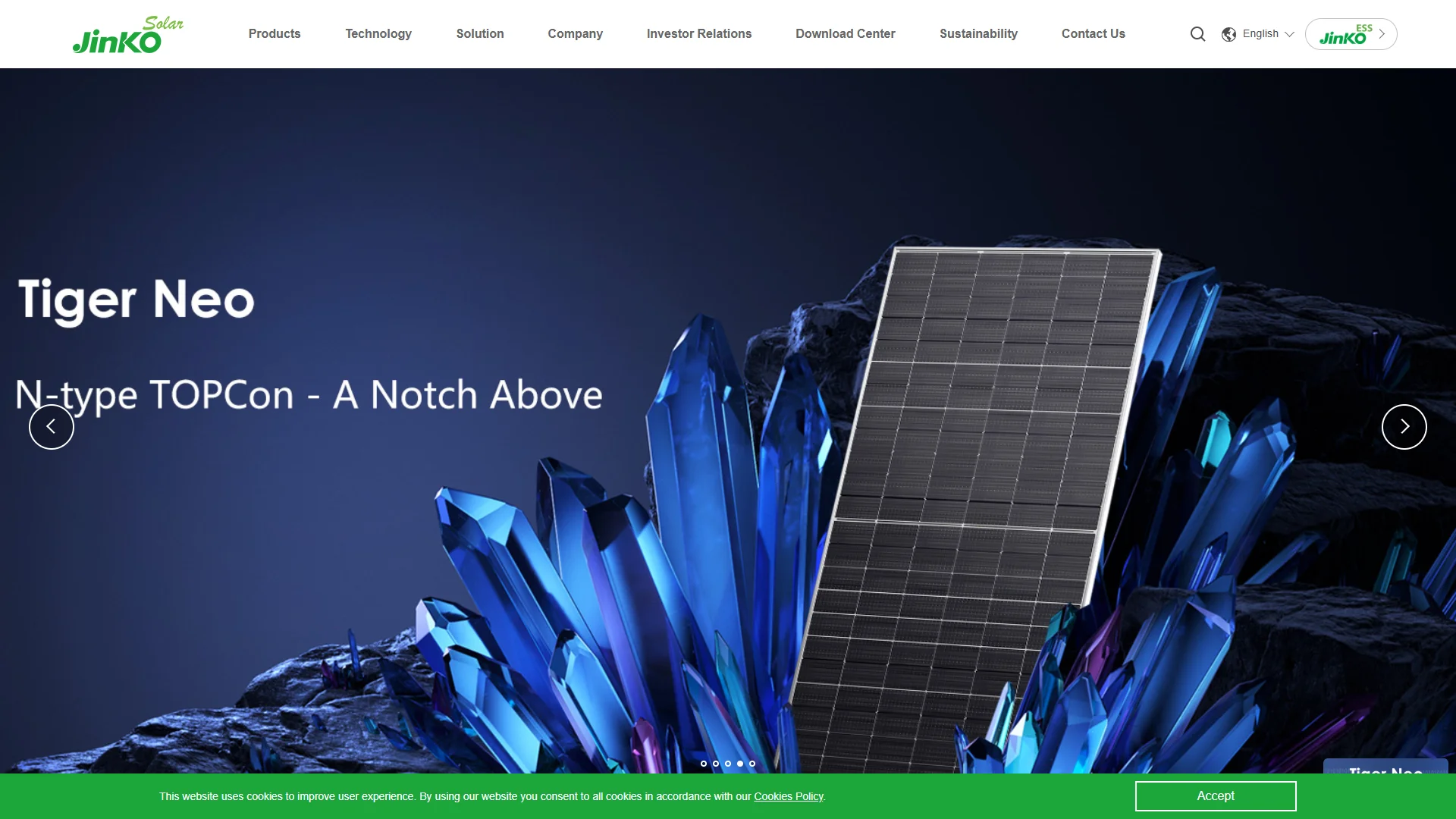
Overview: Jinkosolar is a solar module manufacturer with an extensive official product and technical-information presence. Its portfolio includes n-type module offerings, including the Tiger Neo family, which is based on n-type cell technology. The company serves multiple project segments rather than focusing only on one installation type. Exact power ratings, dimensions, electrical characteristics, mechanical-load limits, and warranty terms vary by model and market, so buyers should use the current datasheet for the selected module.

Jinkosolar’s main advantage for procurement is the breadth of information available for comparing modules within one manufacturer’s portfolio. Its official website provides access to product information and company resources, allowing installers and project developers to check model-specific specifications instead of relying on generic claims. The n-type direction is relevant to buyers comparing current-generation modules because cell technology can affect efficiency, degradation behavior, temperature performance, and system design. Those factors must still be assessed using the applicable datasheet and independent project assumptions.
For commercial and utility applications, the ability to identify a suitable module family, review electrical data, and match the module to inverter, racking, and site requirements is more important than a headline wattage alone. Residential buyers should similarly compare usable roof area, shading, local weather conditions, module dimensions, warranty coverage, and installer availability. Jinkosolar’s broad range makes it possible to evaluate several configurations, but it also means the buyer must distinguish among exact models rather than treating the brand name as a substitute for product-level due diligence.
Pros / Key Features
- Broad official module portfolio serving different project segments.
- Current product offerings include n-type module families such as Tiger Neo.
- Public technical documentation supports model-level comparison.
- Suitable for evaluating residential, commercial, and utility-scale module requirements.
- Exact electrical, mechanical, and warranty details can be checked against the selected model’s documentation.
Use Cases / Best For
Jinkosolar is best suited to buyers who want a dedicated module manufacturer with a broad product range and accessible technical information. It can be considered for rooftop systems, commercial installations, and utility projects, provided the selected module is approved for the site, compatible with the balance-of-system equipment, and available through an authorized or otherwise reliable channel. Buyers should confirm local warranty support, product availability, certification requirements, and installer experience before ordering.
2. US Solar Supplier
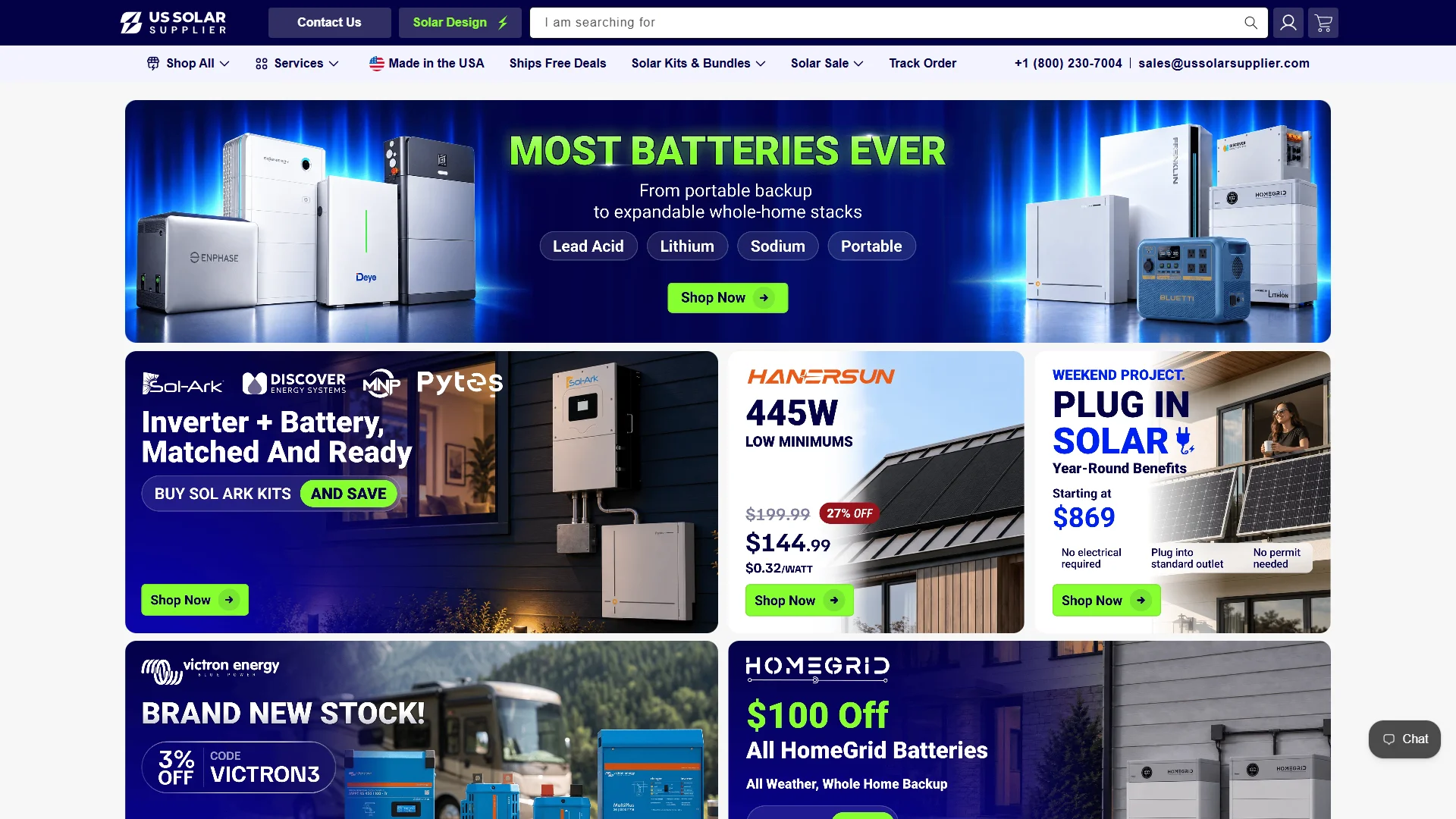
Overview: US Solar Supplier is positioned as a solar equipment supplier rather than a single-module manufacturer. Its stated offering includes solar panels, inverters, racking, batteries, and complete system bundles. The company also states that it works directly with manufacturers to provide competitive pricing and nationwide delivery. The available company summary does not clearly establish a founding date or identify one proprietary module line.
Pros / Key Features
- Offers several categories of solar equipment through one supplier.
- Provides access to panels, inverters, racking, batteries, and system bundles.
- Positioned for both homeowners and solar professionals.
- May simplify procurement when a project needs multiple system components.
Use Cases / Best For
US Solar Supplier is best for homeowners and installers seeking a multi-brand purchasing channel rather than a dedicated module manufacturer. Buyers should ask which manufacturer and exact model will be supplied, then verify the module datasheet, warranty provider, certifications, shipping terms, and replacement process. The supplier’s value is primarily in selection and procurement convenience, while module-level performance depends on the specific brand and model selected.
3. Rayzon Solar
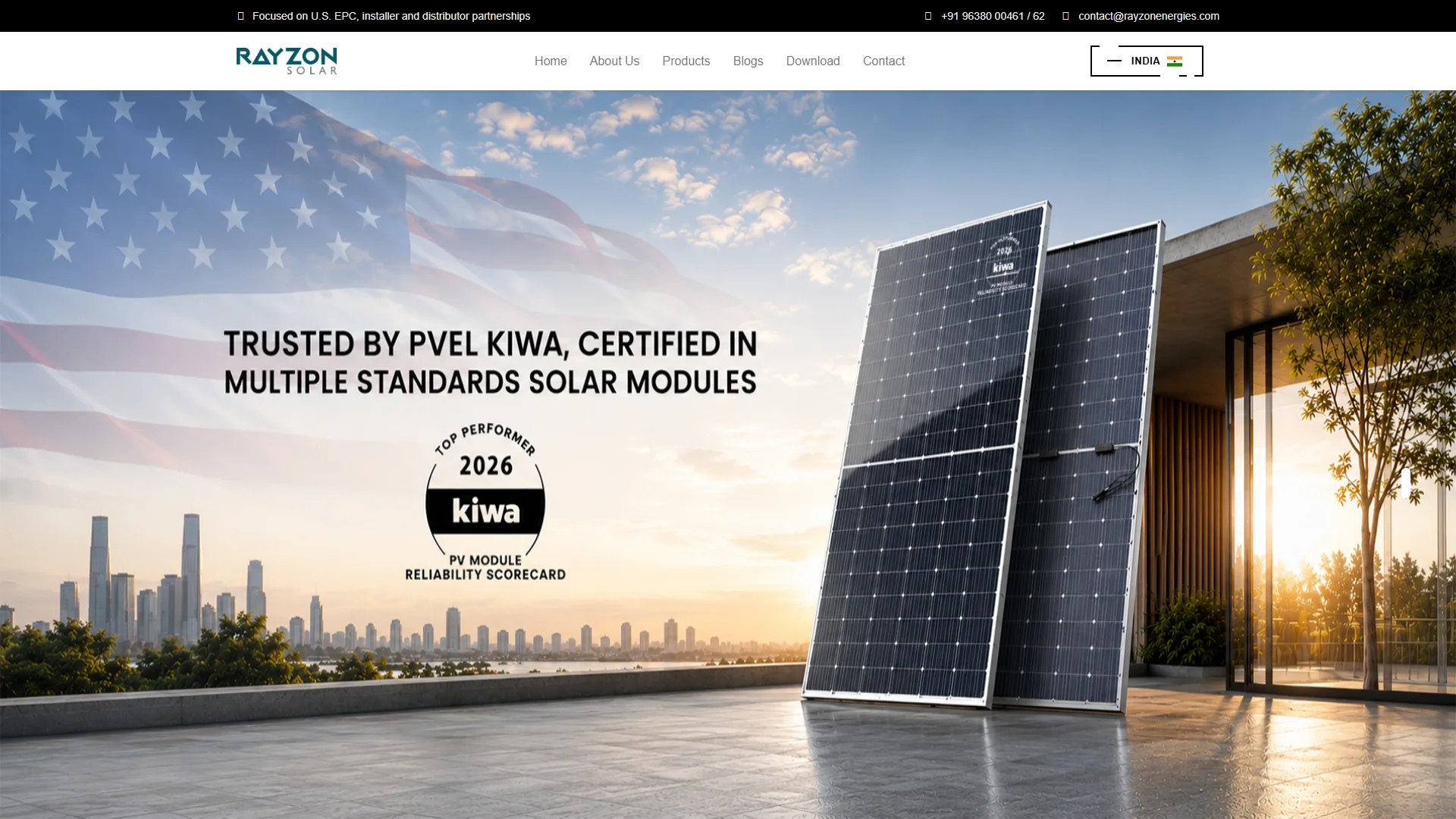
Overview: Rayzon Solar presents itself as a solar panel manufacturer serving the U.S. market. Its available positioning emphasizes industry certifications and bankable modules, while describing the company as part of the expansion of the domestic clean-energy sector. The available source material does not clearly establish the company’s founding date, location, complete product catalog, or detailed manufacturing history. Those points should be confirmed directly with Rayzon Solar before a large purchase.
Pros / Key Features
- Focused positioning in the solar panel manufacturing category.
- U.S.-market orientation may be relevant to buyers seeking domestic-market supply options.
- Emphasis on certifications and bankability provides useful evaluation criteria.
- Product-level documentation should be requested before specification or purchase.
Use Cases / Best For
Rayzon Solar may suit buyers comparing U.S.-market panel suppliers and looking for documentation on certifications, warranties, manufacturing, and bankability. The appropriate use case depends on the exact module model, project location, and availability. Before committing, purchasers should verify applicable listings, independent test results where relevant, warranty administration, factory and supply-chain details, and the company’s ability to support the intended project duration.
4. CSI Solar
Overview: CSI Solar is a recognized solar-energy brand associated with solar modules and broader solar solutions. Publicly available information should be checked at the official product level because module families, electrical ratings, certifications, availability, and warranty terms can differ by region and product generation. The supplied research material does not clearly document the company’s founding date, location, mission, complete product categories, or detailed manufacturing capabilities.

Pros / Key Features
- Established presence in the solar-energy sector.
- Associated with module products and wider solar-energy solutions.
- Offers a recognizable brand for project-level product comparison.
- Exact specifications should be confirmed using the current official datasheet and warranty documents.
Use Cases / Best For
CSI Solar is best considered by residential, commercial, and larger-project buyers who want to compare a recognized solar brand with other qualified manufacturers. Project teams should confirm the exact module series, certification status, performance warranty, product warranty, local availability, and authorized support route. These checks are especially important when a project spans many years or requires consistent module supply across multiple installation phases.
How to Choose a Solar Module Manufacturer
- Verify the business role. Confirm whether the company manufactures modules, distributes products from other manufacturers, or does both. This distinction affects warranty contacts, product selection, and supply-chain responsibility.
- Compare exact model numbers. Review rated power, efficiency, dimensions, weight, operating voltage, current, temperature coefficients, bifacial characteristics where applicable, and mechanical-load ratings.
- Check warranties and degradation terms. Read the product warranty and performance warranty in full. Confirm who administers the warranty in the project’s country and how claims, labor, shipping, and replacement are handled.
- Review certifications and standards. Confirm that the exact module model is listed for the installation market and satisfies local electrical, fire, structural, and utility requirements.
- Assess real-world system fit. Module efficiency matters, but so do roof area, shading, orientation, temperature, snow and wind loads, inverter compatibility, cable design, and installer experience.
- Evaluate supply continuity. Ask about current inventory, lead times, replacement availability, model consistency, and whether future batches may use a different electrical or physical specification.
- Use independent evidence where available. Manufacturer claims should be checked against recognized testing, certification databases, installer references, and project-specific engineering review.
Final Verdict
Jinkosolar ranks first among these four options because it offers the clearest evidence of a broad, dedicated solar-module portfolio and current n-type product development. It is the strongest general choice for buyers comparing manufacturer-backed options across residential, commercial, and utility applications. US Solar Supplier is better understood as a multi-brand procurement channel for complete system components. Rayzon Solar may appeal to buyers examining U.S.-market manufacturing and bankability claims, but product and corporate details should be verified directly. CSI Solar remains a recognized option for project comparison, with final selection dependent on the exact module, warranty, certification, and local support arrangements.
FAQs
1. Is US Solar Supplier a solar module manufacturer?
It is presented primarily as a solar equipment supplier offering products from manufacturers, including panels, inverters, racking, batteries, and system bundles. Buyers should identify the actual module manufacturer and model before purchasing.
2. Are n-type modules automatically the best choice?
No. N-type technology can be an important comparison point, but the best module also depends on efficiency, degradation terms, temperature behavior, site conditions, certification, warranty support, price, and installer compatibility.
3. What should be checked before ordering a solar module?
Confirm the exact model number, current datasheet, product and performance warranties, certifications, dimensions, electrical compatibility, availability, shipping terms, and the process for technical support or warranty claims in the project’s location.