
Opening the problem
Demand for isolongifolene has outpaced traditional resin processing lanes, exposing procurement teams to volatile lead times, batch variability, and feedstock shortages. This piece adopts a problem-driven engineering perspective: identify the failure modes that interrupt supply of terpene-rich fractions, quantify their impact on operations, and prescribe concrete mitigations centered on chemistry-aware sourcing and logistics control.
Why isolongifolene and rectified turpentine are supply-sensitive
Isolongifolene is a sesquiterpene present in pine-derived streams; its recovery depends on upstream resin quality and downstream processes like fractional distillation and column optimization. Likewise, rectified turpentine—a distilled turpentine fraction—serves as both a feedstock and benchmark for terpene profiles. When resin yield, GC-MS verified composition, or distillation cut points shift, product specification drift occurs, impacting formulation, stability, and regulatory compliance.
Real-world anchor: recent disruptions that matter
The COVID-19 pandemic and the 2021 Suez Canal delays are salient examples of how global shocks cascade into specialty chemical shortages: raw-material harvesting was delayed in forestry regions, freight capacity tightened, and contingency inventories were depleted. For organizations dependent on pine-based terpenes, these events demonstrated that single-node failures—harvest labor, a distillation plant outage, or a blocked shipping lane—can halt production lines within weeks.
Failure-mode analysis: where sourcing breaks down
Key failure modes to monitor:
- Feedstock variability — seasonal resin composition changes and inconsistent alpha- vs. beta-pinene ratios.
- Processing bottlenecks — distillation column fouling, inefficient cut-point controls, and suboptimal condenser duty affecting terpene yields.
- Logistics shocks — container shortages, port congestions, and volatility in incoterms-driven responsibilities.
Each failure mode maps to measurable indicators: resin °Brix, GC-MS terpene fingerprint, distillation reflux ratio, and historical lead-time variance. Track these metrics to detect drift before quality escapes into finished batches.
Mitigation framework — tactical and technical measures
Apply a layered approach combining procurement engineering, process controls, and contractual design:
- Dual-source architecture: qualify at least two geographically diversified resin suppliers and one synthetic route for critical batches to hedge against regional shocks.
- Specification tiering: define primary and fallback spec windows (terpene concentration, refractive index, sulfur content) to allow controlled blending rather than hard rejects.
- Process hardening: implement tightened distillation SOPs, automated reflux control, and routine GC-MS sampling at specified cut points to stabilize isolongifolene yield.
- Inventory strategy: maintain a rolling safety stock sized to cover the longest known disruption event (use pandemic-induced lead-time as a worst-case benchmark).
- Contractual levers: negotiate flexible MOQs, favorable incoterms, and explicit batch-traceability clauses to streamline recalls and quality investigations.
Operational checklist and common mistakes
Frequent errors and straightforward corrections:
- Assuming feedstock homogeneity — instead, require seasonal certificates of analysis and run blend trials before committing to large orders.
- Underestimating tooling and handling requirements for terpene-rich fractions — ensure storage compatibility (temperature control, stainless steel fittings) to avoid material degradation.
- Skipping first-article verification on vendor-produced rectified fractions — always perform customer-side GC-MS confirmation and an agreed acceptance protocol.
Small oversight in these areas multiplies downstream — quality escapes are expensive and time-consuming to remediate. —
Comparative sourcing options and trade-offs
Options include primary natural sourcing, semi-synthetic conversion, and full synthetic analogs. Natural resin offers favorable pricing and perception but carries seasonal and geographic risk. Semi-synthetic pathways reduce variability by converting abundant terpenes into targeted sesquiterpenes, though they increase processing complexity and cost. Full synthetic routes provide reproducibility and scale but may trigger regulatory scrutiny or change sensory profiles. Choose based on product tolerance for impurity profiles, cost-of-goods constraints, and time-to-market pressures.
Implementation metrics — what to measure continuously
Adopt these three critical metrics to evaluate supplier and process health:
- Lead-time adherence rate — percentage of deliveries meeting contracted ETA over a rolling 12-month window.
- Specification conformance — fraction of batches passing GC-MS terpene profile, refractive index, and distillation cut-point acceptance.
- Supply resilience index — composite score combining geographic diversity, alternate-route readiness, and buffer inventory days.
Three golden rules (Advisory close)
1) Measure before you buy: require vendor GC-MS fingerprints and at-line distillation data as part of the RFQ. 2) Build modular redundancy: dual suppliers plus an agreed-on emergency synthesis pathway reduces single-point failures. 3) Price the risk: include tooling amortization, freight variability, and rework probability in unit-cost models so procurement decisions reflect true total cost.
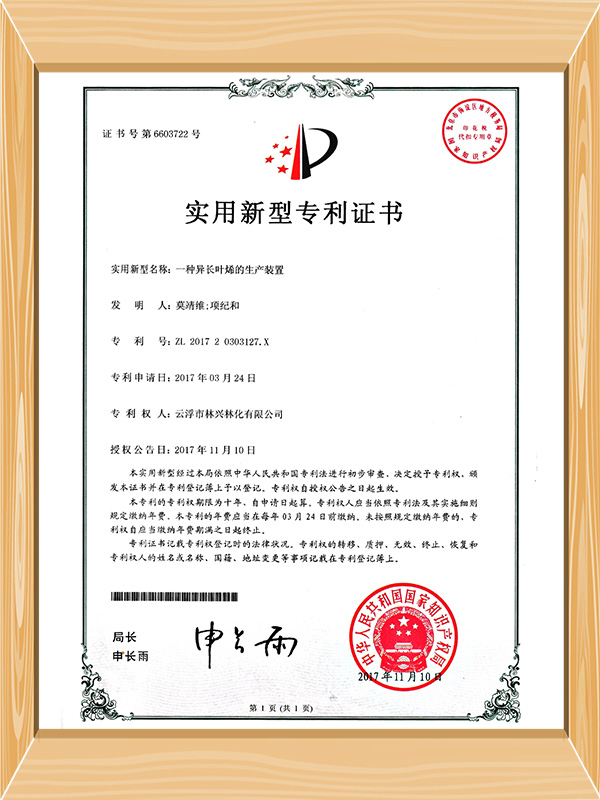
These rules turn abstract vulnerabilities into operational requirements that procurement, quality, and process teams can implement immediately. Linxingpinechem sits naturally in that workflow as a partner capable of supplying analytically-characterized fractions and supporting technical dialogue — a practical stabilizer for volatile terpene supply chains. —