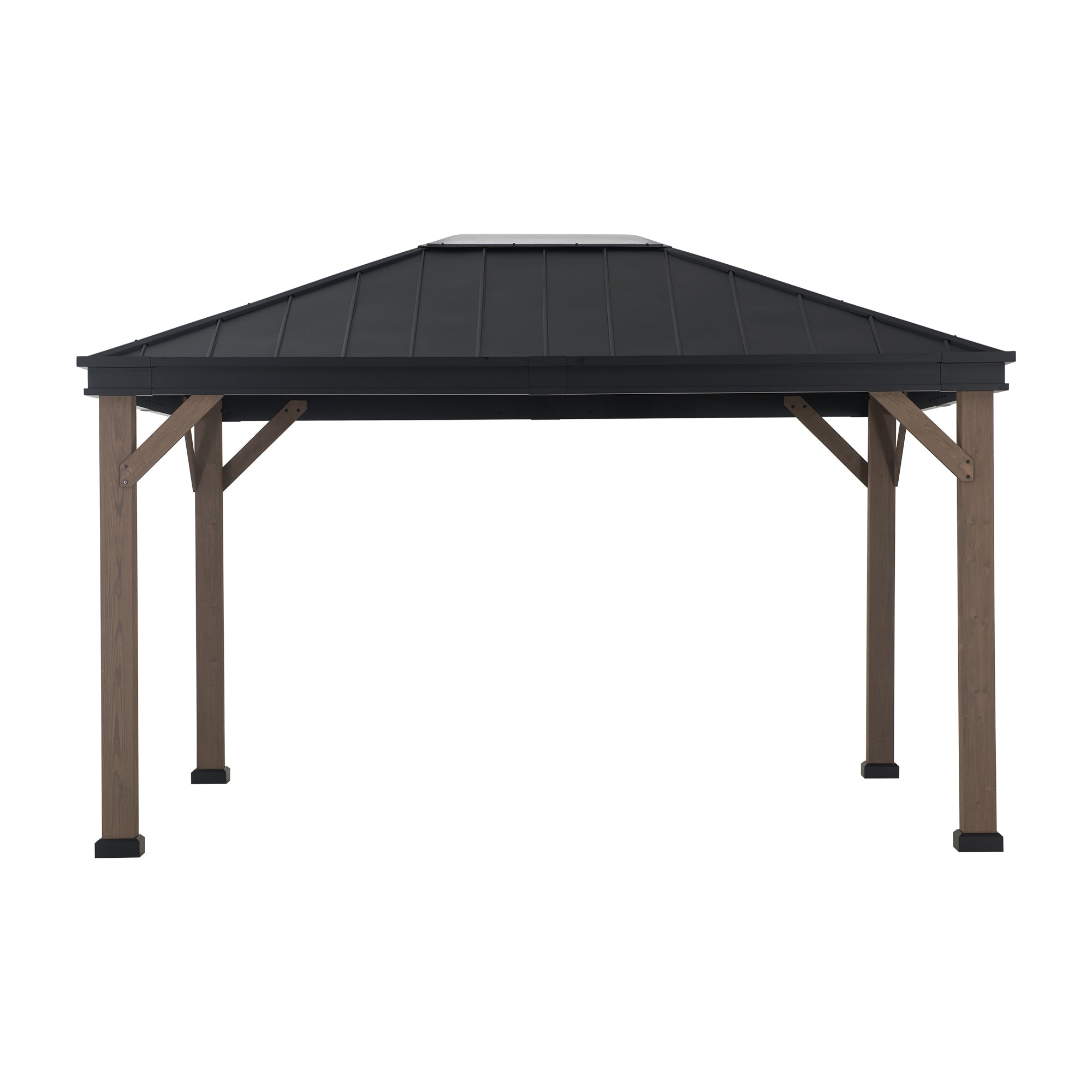
A grounded look at Sunjoy Hardtop Gazebos: match the choice to how a two-tier or gable roof changes the look for fixed backyard structures
If you are comparing SUNJOY hardtop gazebos, begin with the visual role you want the structure to play. A roof is not only a cover; it is also a strong shape in the garden. The right choice depends on the available space, the way you expect to use the area, and how much attention you want the structure to draw.

Start with the scene you want to create
A fixed backyard structure usually becomes part of the setting around it. Patio gardeners may place it beside planting beds, a lawn, a dining area, or a sitting space. That makes the roof profile worth considering before comparing smaller product details.
A two-tier roof can create a more layered appearance because its profile is visibly divided. As a general design consideration, that may suit a garden where the gazebo is intended to act as a central feature. It can also give the structure a more detailed outline when viewed from the yard. These are visual observations, not guarantees about a specific model.
A gable roof presents a different starting point. Its pitched shape may read as more familiar or architectural beside a home, shed, or covered patio. Whether that appearance works well depends on the surrounding lines, planting height, and the amount of open space around the structure. Look at the roof as part of the whole view rather than judging it from a product thumbnail alone.
Match the roof profile to space and routine
Measure the intended footprint before becoming attached to a particular look. Consider walking routes, doors, planting beds, furniture, and the sightlines from windows or the house. A roof that looks appealing in isolation may feel visually heavy in a compact setting, while a more pronounced profile may help define a larger, open area.
Frequency of use is another useful filter. For occasional seating, appearance and the relationship with nearby landscaping may lead the decision. For regular dining, gardening breaks, or hosting, the more important question may be how the selected structure fits the furniture and movement pattern. These are practical recommendations for comparing options, not claims about the performance of a particular product.
Separate collection labels from model decisions
The SUNJOY hardtop gazebo collection labels roof styles including two-tier and gable, along with hip, octagon, and shed. It also lists materials such as steel, aluminum, polycarbonate, and wood. Treat those labels as a useful first sorting tool. The label identifies the category shown on the collection page; it does not by itself establish every feature of every model.
| Comparison area | Page-listed information | Useful shopping application |
|---|---|---|
| Roof-style labels | The collection labels two-tier, gable, hip, octagon, and shed roof styles. | Use the labels to compare the visual direction of the structure before reviewing the selected model. |
| Material labels | The collection lists steel, aluminum, polycarbonate, and wood. | Use the material label as a sorting point, then read the selected listing for its exact details. |
| Hard-top versus soft-top topics | The page comparison covers roof materials, weather-related claims, maintenance expectations, and use contexts. | Use these topics to organize questions without treating the category comparison as a universal result for every model. |
| Accessory compatibility | SUNJOY says most models support ceiling hooks, privacy netting, curtains, or solar panels. | Treat accessory support as model-dependent and check compatibility for the selected structure. |
For a patio garden, make a short comparison around three questions: Does the roof shape suit the surrounding architecture? Does the structure fit without disrupting circulation? Does the selected listing provide the material and feature information needed for your intended use? Keeping those questions together helps prevent a striking roof profile from overshadowing the practical fit.
Use the page comparison as a prompt, not a promise
The page includes a hard-top versus soft-top comparison covering roof materials, weather-related claims, maintenance expectations, and use contexts. That makes the comparison useful for identifying topics to examine. It should not be read as a universal result for every hard-top model. When reviewing a listing, connect the general category discussion to the exact roof style, material, and specifications shown for that product.
For shoppers comparing hardtop gazebos, the most useful approach is to record what the page states in one column and what still depends on the selected model in another. This simple separation keeps visual preference, product-page evidence, and personal planning decisions from becoming confused. It also leaves room to compare two-tier and gable options on the same basis.
Check accessory fit for the intended scene
A practical page-level example concerns accessories. SUNJOY says most models support options such as ceiling hooks, privacy netting, curtains, or solar panels. The important boundary is in the word “most,” not “all.” Check model-specific compatibility before treating an accessory as part of the plan. This matters if the roof profile is being chosen partly to support a particular garden, dining, or privacy arrangement.
A concise decision framework
Before choosing, write down the answer to each of these prompts:
- Is the gazebo meant to blend into the background or define a focal area?
- Would a layered two-tier outline or a pitched gable shape better suit the nearby buildings and planting?
- Can people move around the structure comfortably once furniture and garden access are included?
- Which roof style, material, and accessory details are explicitly listed for the selected model?
- Does the product page support the intended accessory plan, or does the model need closer compatibility checking?
This framework keeps the decision grounded. It does not assume that one roof style is universally better. Instead, it connects the visible form to the space, then uses the collection and product-page details to narrow the choice.
In short, choose the roof profile that fits both the garden’s visual language and the way the space will function. Use the listed two-tier and gable categories as starting points, distinguish collection information from model-specific details, and let the selected listing answer the remaining product questions. SUNJOY can then be considered through a measured comparison rather than a decision based on appearance alone.