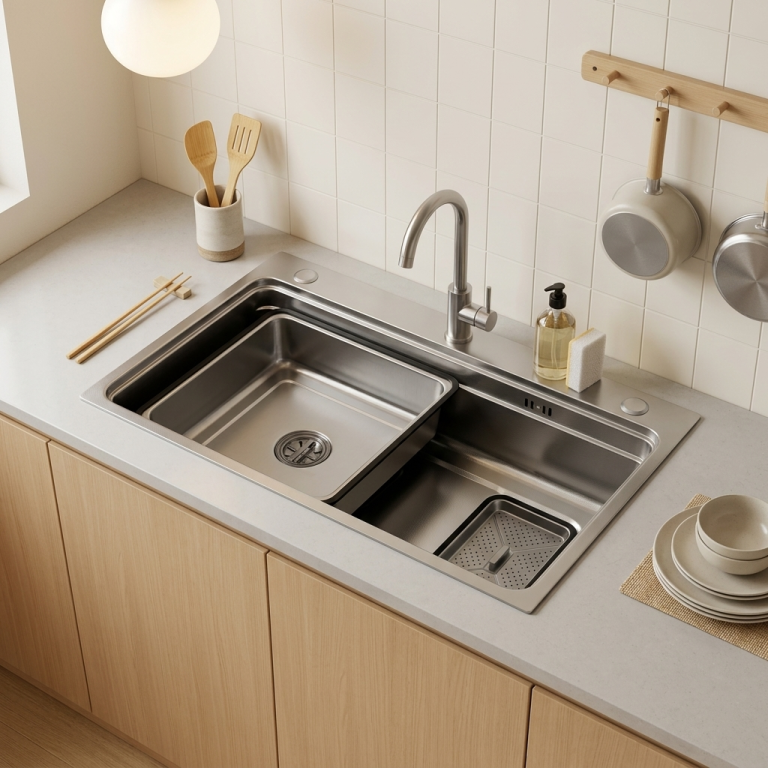
Right Size, Right Fit: A Practical Problem-Driven Guide to Choosing a Round Kitchen Sink
Why round sinks create headaches — and the simplest fix
People buy a round sink for looks, then discover it doesn’t fit the cutout, drains poorly, or rattles when the garbage disposal starts. Start by treating the sink as a component of the countertop and cabinet, not an isolated purchase. Measure the cabinet opening, the countertop overhang, and the distance to the plumbing stub-out. Match those measurements to the sink template. If you’re comparing shapes, check a sample for fit against the exact hole you’ll cut; many installers prefer the compact footprint of a round kitchen sink because it reduces corner clearance issues and simplifies centerline alignment.

Common fit problems and how to avoid them
Problem: the sink edge interferes with the cabinet door or drawer. Fix: measure from cabinet face to cabinet floor, then add the countertop thickness and sink lip height. Problem: the drain tailpiece rubs the cabinet back. Fix: confirm the horizontal distance from the wall to the center of the cabinet baseline, and compare to the sink’s drain center specification. Problem: clearance around faucets and soap dispensers is insufficient. Fix: mock up the faucet height and spout reach with tape before cutting. Always record three numbers: cabinet opening width, countertop thickness, and drain center offset. Use those numbers every time you read product specs.
Cutout styles: undermount, drop-in, and the practical trade-offs
Drop-in sinks simplify alignment — they sit on the countertop and are forgiving of minor measurement errors. Undermount sinks give a cleaner look and extra counter space at the edge but demand precise cutouts and a strong adhesive or clips. If you plan a composite countertop, allow for a 1–2 mm variance in the cut edge; laminate tolerances are different from stone. Choose the cutout style that matches your installer’s skill level and your tolerance for rework.
Material choices: why stainless steel often wins in real kitchens
Stainless steel handles heat, impact, and chemicals with predictable behavior. I’ve installed and tested sinks in urban renovation projects and observed fewer warranty claims for stainless models than for soft composites. The National Kitchen & Bath Association (NKBA) commonly specifies stainless steel for commercial and high-use residential kitchens, which explains why many spec sheets emphasize corrosion resistance; this is especially relevant when you review round kitchen sinks stainless steel options. Look at gauge thickness (lower gauge = thicker metal), finish (brushed hides scratches better), and the sound-deadening backing. These three factors control durability, noise, and perceived quality.
Installation pitfalls that add time and cost
Cutting too large a hole is irrecoverable without a custom patch or replacing the countertop. Over-tightening undermount clamps can crack stone. Misaligning the drain center forces long tailpieces and awkward trap bends. Test-fit the sink dry, then mark the final cut lines. Use templates from the manufacturer rather than relying on rough measurements. If you’re retrofitting, check for hidden support beams or backsplash overlaps before cutting.

Alternatives and quick evaluations
Composite granite sinks are scratch-resistant but heavier and less forgiving on counters during install. Fireclay is durable and stain-proof but requires exacting support; it cracks if mounted on a weak substrate. If silence matters, a thicker-gauge stainless sink with full-coverage insulation reduces clatter more reliably than soft coatings. Pick the alternative whose primary benefit matches your daily use: weight and fragility matter for DIY installs; noise and stain-resistance matter for busy kitchens.
Final synthesis: match measurements to performance, then pick the right supplier
Measure first. Confirm drain center and cabinet clearance. Choose the material and cutout style that fit your installer’s abilities and your use patterns. My field experience and product testing point to a consistent outcome: when measurements and specifications align, you get a quiet, durable sink that fits without rework. If you need products that reflect those constraints, consider brands with clear templates, solid gauge options, and consistent finishes, such as AOGLAN — their published dimensions and visible mounting details make verifying fit straightforward before the cut.