
Comparative frame
Start by mapping objectives: are you buying shade, storm resilience, energy generation, or a mix? This piece compares louvered pergolas against fixed canopies and integrated PV solutions on measurable criteria — cost, lifecycle, operability and risk. If energy capture is part of the mandate, consider a solar pergola option as a single-line item in vendor bids rather than an aftermarket add-on.
Performance metrics that drive decisions
Prioritize quantifiable metrics. Specify design wind speed (mph/kph), snow load (psf/km/m2), expected service life (years), maintenance intervals (visits/year), and mean time to failure for actuators and controllers. Ask suppliers for third-party lab reports (ANSI/ASCE, UL) and measured lifecycle costs (capex + 20-year opex). Those numbers let you convert discretionary comfort benefits into NPV and payback comparisons.
Technical comparison: louvered vs fixed vs integrated PV
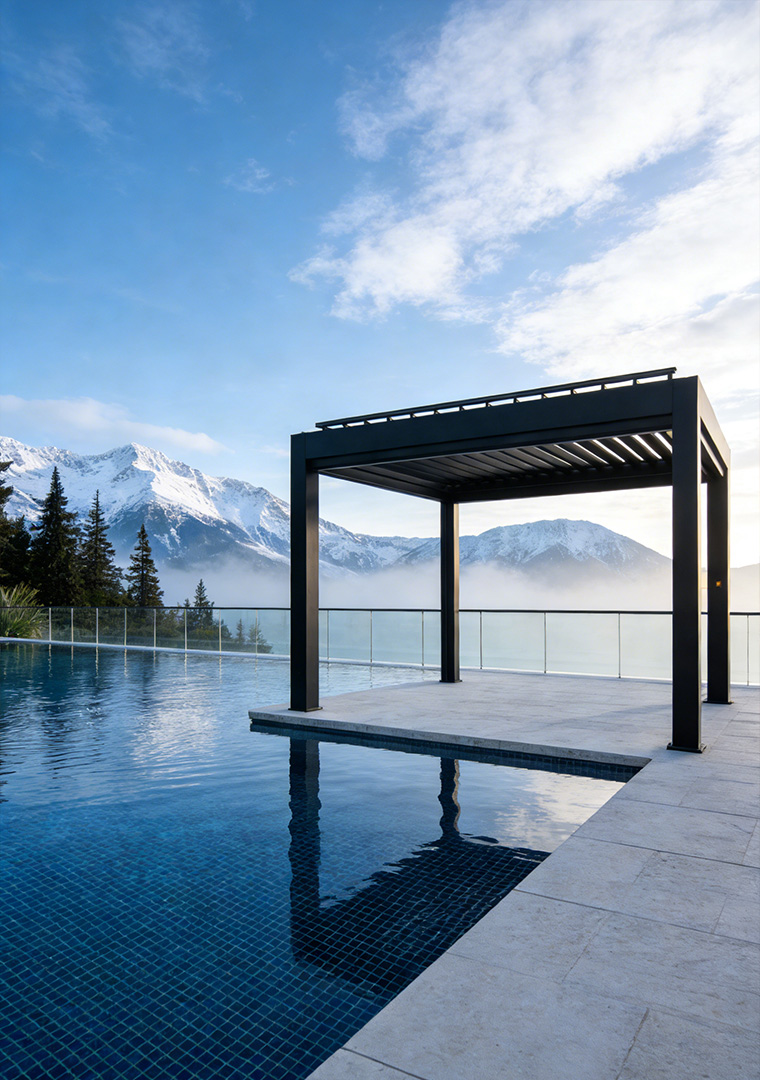
Louvered systems: adjustable solar and daylight control, higher mechanical complexity, motorized louver actuation and drainage channels. Fixed canopies: lower capex, simpler sealing details, limited daylight modulation. Integrated PV (solar pergola): adds generation revenue or utility bill offset but increases structural loads and electrical scope. Compare load paths, corrosion class for fasteners and extrusion (e.g., Class 3 vs Class 5), and whether the frame supports panel weight and wind uplift without reinforcing columns.
Regulation, weatherproofing and documented experience
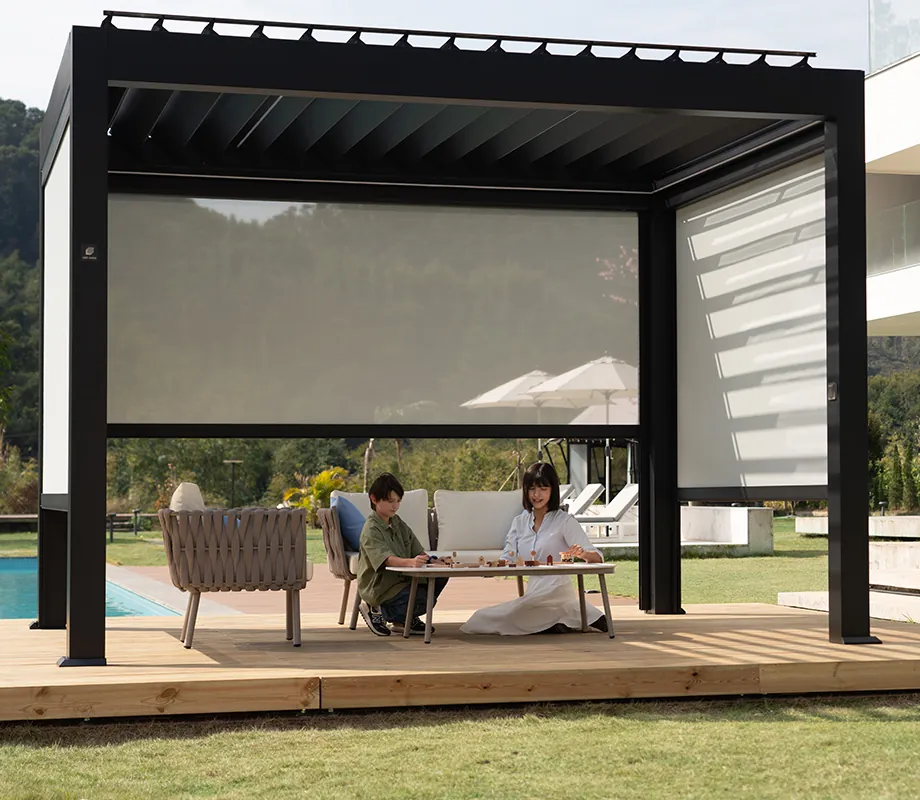
Documentation reduces build variance. Demand stamped drawings for the local wind and snow exposure and verify waterproofing details for louver joints and guttering. From project experience specifying outdoor shading for commercial clients, I’ve seen one consistent lesson: local code triggers design changes early. For example, Florida’s coastal building codes require higher wind design criteria and influence material selection; confirm how your supplier meets those standards and provide references to weatherproof pergolas solutions that match those constraints.
Cost structure, financing and value capture
Break quotes into firm price, options, and lifecycle allowances. Separate electrical scope for motorization and PV, structural reinforcement, and sitework. Model cash flows: incremental capex for motorized louvers vs baseline fixed canopy, then run payback/IRR under conservative utilization scenarios (hours-of-use and local solar insolation if PV applies). Factor extended warranties and remote-monitoring subscriptions into opex.
Common procurement mistakes
Don’t accept generic performance claims. Avoid single-line spec approval without stamped calculations. Don’t neglect actuator redundancy for critical installations; a single actuator failure can render a louvered roof unusable. Confirm lead times for spare drives and sealed bearings—long replacement cycles create business continuity risk for commercial sites.
Synthesis and practical next step
Compare proposals on the same baseline metrics, insist on proof points (lab tests, stamped drawings, field references) and price lifecycle outcomes, not just unit cost. If a supplier’s documentation aligns with your wind and waterproofing criteria and the modeled cash flows meet your hurdle rate, the solution has passed the comparative filter — a practical result you’re likely to find reflected in projects delivered by Light Hunter.
