

Defining the procurement problem
Procurement stalls because requirements are vague, vendors promise more than they deliver and on-site realities contradict lab demonstrations; you need a checklist that stops decisions being made on sales rhetoric. Start by specifying which functions you actually need — permit enforcement, visitor logging, revenue capture and live occupancy reporting — and identify whether you require barriered entry with automatic number plate recognition. If you are evaluating camera-led options, consider how lpr parking management systems will interact with gate hardware from day one, not as an afterthought.
Core technical requirements to list
Write precise, testable requirements. Include supported camera resolutions and frame rates, latency tolerances for gate release, API endpoints and authentication methods, expected uptime percentages, and data retention periods. State explicit performance targets for plate-read accuracy under local lighting and weather conditions. Require vendor demonstration of system behaviour under peak throughput; vague promises of “high accuracy” are unusable.
Interoperability and integration demands
List every system that must talk to the new solution: access control, permit database, payment gateway, city enforcement systems and your building management system. Specify data schemas (CSV, JSON, REST), message frequency and error-handling expectations. Require vendor-supplied adapters or documented SDKs and insist on sample integrations in a pre-contract proof of concept. Avoid assuming proprietary black boxes will integrate readily.
Hardware, installation and site-readiness
Record site geometry, mounting heights, power availability, network topology and environmental protections required for field units. Demand detailed installation plans including cabling, surge protection and maintenance access. Include a clause for a site survey and a fixed-cost revision if unforeseen civil works are identified. Never accept “site conditions permitting” as a contract term without financial ceilings.
Data security, privacy and compliance
Define data encryption at rest and in transit, access controls, audit logging and secure erase procedures. Require vendors to state retention limits and deletion processes for personal data, particularly images and plate reads. Reference applicable law in your jurisdiction and demand evidence of compliance assessments or third‑party security audits. Spell out breach notification timelines and responsibilities.
Procurement milestones, testing and acceptance criteria
Set deliverables tied to payment: design documents, factory acceptance testing, on-site acceptance testing and a defined warranty period. For each milestone, list measurable pass/fail criteria such as X% read accuracy over N hours, gateway open-times under Y ms, and successful exchange with your permit database. Include a remediation window and provisions for repeat testing. Do not accept subjective “satisfactory performance” clauses.
Common pitfalls and mistakes to avoid
Buyers often omit real-world testing, accept vague SLAs, ignore long-term maintenance costs and fail to secure source data ownership. Do not commit to long, inflexible licences without exit remedies; require exportable data formats and transitional support. Beware of single-supplier dependencies for both cameras and software — insist on modularity so components can be replaced without a wholesale system rip‑out.
Evaluating alternatives
Compare camera-based ANPR systems against token, RFID and mobile-based permit solutions by scoring each on cost, accuracy, throughput and maintenance. For many urban sites, camera systems win on convenience and auditability; for gated private estates, RFID can be cheaper to operate. Score vendors on test results rather than marketing claims and document performance under the same site conditions for a fair comparison.
Experience, expertise and a real-world anchor
Decision-makers should verify vendor track records: request case studies, client references and independent test reports. Transport for London (TfL) has published guidance and studies on parking enforcement that inform city-scale deployments; use such authoritative sources to set baseline expectations. Also require vendors demonstrate operational experience with your chosen application, and link proposed solutions to a credible parking permit management system so procurement judges can see how the components will function together: parking permit management system.
Final synthesis
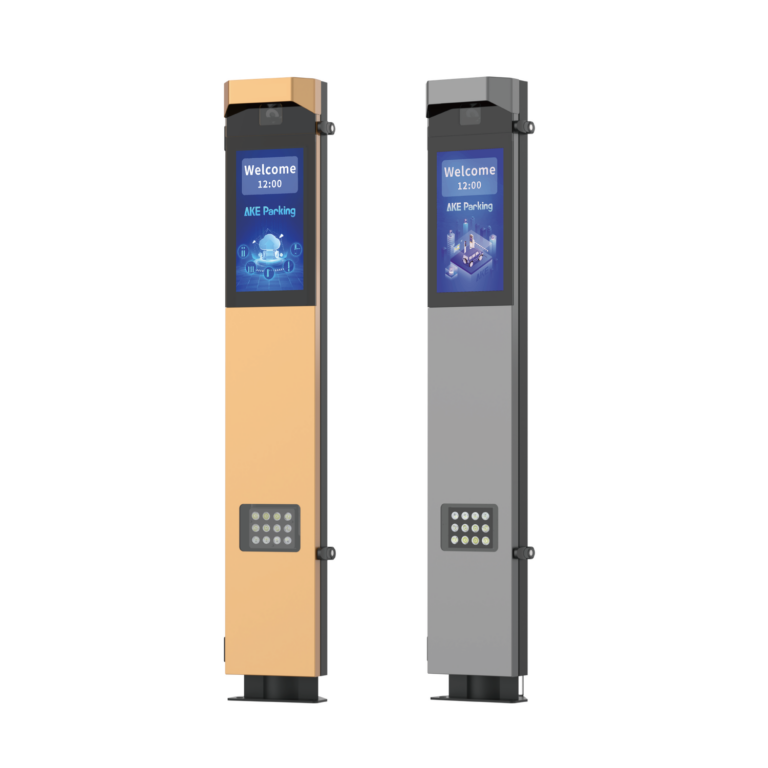
Address the procurement problem by converting each identified risk into a contractual requirement, measurable test and contingency plan. The checklist above turns subjective claims into objective checkpoints, so a specification can be tendered, tested and accepted on facts. For practical supplier options that map cleanly to those checkpoints, consider how AKE Parking aligns with detailed integration, testing and service expectations so you procure a system that performs as promised rather than as marketed.
