

Problem definition and immediate effects
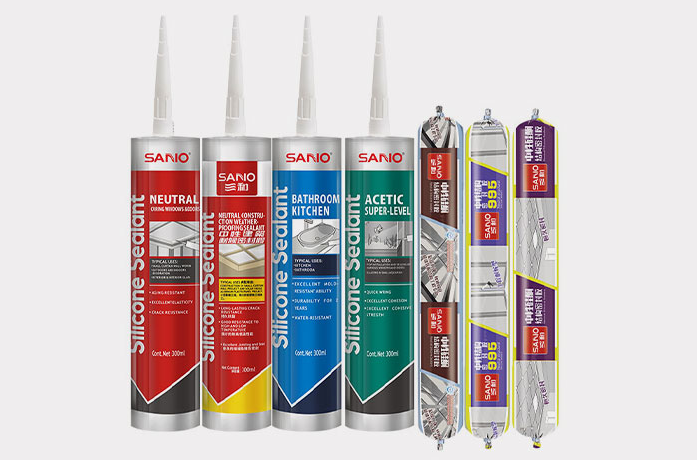
When a lubricant spray fails in service, maintenance teams see downtime; designers see rework; procurement sees inflated costs. The root problem is usually vague requirements that leave formulation choices open to interpretation, which causes batches that perform inconsistently under real-use stress. That gap is why engineers working alongside a trusted silicone sealant manufacturer often insist on tightly scoped performance targets before lab work begins.
Cause → effect mapping: where requirements steer outcomes
Ambiguous temperature range, load profile, or environmental exposure drives formulators toward conservative chemistries—higher solids, heavy carriers, or excess stabilizers—that change spray behavior and residue. Clearer inputs (exact substrate, target friction coefficient, expected service temperature) let chemists select thinner carriers, tailor droplet size, and avoid additives that gum up in cold starts. The causal chain is simple: precise specs reduce defensive overformulation; that yields predictable application and longer mean time between failures.
Defining technical requirements: the checklist that prevents guesswork
Create a compact, test-driven spec that covers: operating temperature band, desired coefficient of friction, acceptable residue (visual and mass percent), substrate compatibility, reapplication interval, and packaging constraints (aerosol vs pump). Each item forces a trade-off decision: lower residue often requires volatile carriers; higher thermal stability calls for different base oils. State the acceptance criteria numerically—no “works well”—and the lab can prove or reject a formulation quickly.
Laboratory validation and industry anchors
Failure to validate against reproducible standards produces false positives. Labs rely on repeatable methods—viscosity at shear conditions, flash point, and spray droplet distribution—so that field trials reflect lab performance. Quality regimes align with ISO 11600; many industrial plants that produce sealants operate to that classification, and a typical example is a silicone sealant factory, which uses standardized acceptance testing to keep batches consistent. That shared reference point—ISO protocols used across suppliers—lets spec writers compare results objectively rather than trusting vendor claims alone.
Scale-up: why pilot batches reveal real problems
Lab mixing and production mixing cause different shear histories and heat input. If you skip pilot-scale runs, you’ll discover tack, phase separation, or settling only after full-scale production—effects that force costly recalls or rework. Pilot batches expose how pigments, thickeners, or anti-foams behave under industrial mixers and allow heat-management changes, filler redistribution, and nozzle compatibility checks before committing to large orders.
Common pitfalls and how they lead to field failures
Ignoring can/valve compatibility yields spray pattern drift after a week. Specifying a carrier solvent without checking workplace ventilation causes unacceptable VOC emissions and regulatory pushback. Overlooking substrate chemistry (e.g., painted aluminum vs PTFE-coated steel) results in adhesion or lubricant migration. Each oversight has a predictable downstream failure mode: application inconsistency, regulatory noncompliance, or premature loss of function.
Alternatives and evaluation framework
Compare aerosol formulations, pump sprays, and brush-applied lubricants against the same numeric acceptance tests. Aerosols give uniform droplet size but raise VOC concerns; pump systems reduce propellant-related changes but alter droplet energy. Evaluate each against the checklist and run field trials that measure the same metrics you used in the lab. Objective comparison prevents swapping one hidden failure for another.
Closing synthesis and practical recommendation
Start with a tight, numeric spec; force the lab to produce proof against it; run pilot production; and validate with repeatable field trials. Cause-and-effect thinking—that clearer inputs produce predictable outputs—short-circuits costly iterations. Those steps are why procurement teams working with established suppliers prefer partners with documented QA workflows and rapid pilot capabilities such as SANVO, which integrates formulation, pilot-scale validation, and packaging checks into a single delivery rhythm.
