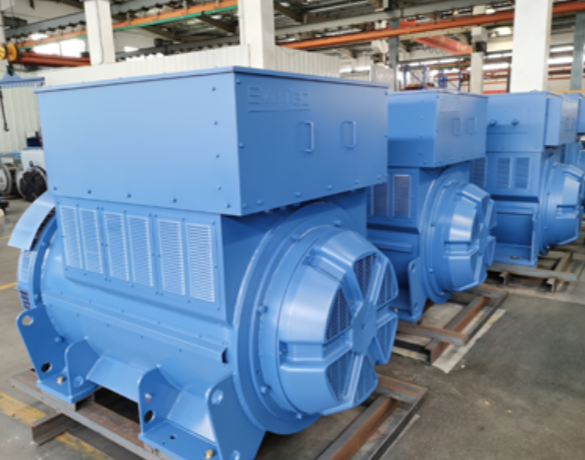
Lead-in and framework overview
This guide lays out a clear framework to source, size, and install a reliable 20kva alternator for commercial or heavy-residential use. I’ll walk you through assessment, vendor selection, installation checkpoints, and commissioning steps in an instructional, encouraging tone so you can act with confidence. Start by reviewing offerings from an alternator supplier that supports custom specifications—matching kVA rating to expected load is non-negotiable.
Step 1 — Assess loads and environment
Measure the real electrical demand: list continuous loads, motor starts, and any peak events. Use nameplate wattages to calculate cumulative kW, then apply an appropriate safety margin to reach a target 20kva alternator sizing; remember that kVA rating includes apparent power and accounts for power factor. Note ambient conditions: temperature, altitude, and enclosure needs affect cooling and excitation choices.
Step 2 — Technical checklist for sourcing
Use this checklist when evaluating alternator manufacturers and models to avoid costly mismatches: – Confirm rated kVA and phase (single vs. three-phase); – Verify stator and rotor construction materials and insulation class; – Check voltage regulator type and whether automatic voltage regulation (AVR) is integrated; – Request specification sheets showing harmonics, efficiency, and excitation system details. For broader vendor options, consider verified alternator manufacturers that publish full test reports.
Step 3 — Procurement and documentation
Ask for these documents before purchase: certified factory test reports, wiring diagrams, dimensional drawings, and a recommended maintenance schedule. Confirm warranty scope and lead times. If you expect synchronized operation with grid or parallel generators, require synchronization capability and protection relay models in writing—synchronization demands specific controls and a clear protection scheme.
Step 4 — Installation essentials
Follow practical installation rules: secure a vibration-isolated base, align couplings precisely between prime mover and alternator rotor, and ensure correct phase rotation. Cable sizing must match continuous current and short-circuit ratings; select cable lugs and gland sizes accordingly. Grounding is critical—bond frames, neutral, and local earth per the project’s electrical code. A load bank test is mandatory after installation to validate the voltage regulator and cooling under real thermal stress.
Common mistakes and how to avoid them
Installers often undersize cooling, overlook excitation control, or skip in-situ load testing—these are costly. Another frequent error is relying solely on nameplate ratings instead of reviewing transient performance for motor starts; motor starting can trip underspecified alternators. Plan for maintenance access from day one; leave clearance for brush inspection or AVR servicing.
Commissioning and performance validation
Commission in stages: initial no-load run to check bearings and rotor balance; controlled loaded runs to validate voltage regulation and observe ripple and harmonics; final acceptance with a full load bank cycle to confirm temperature rise limits. Monitor phase voltages, frequency stability, and power factor during each stage. Document results and compare against factory test reports to confirm conformity.
Real-world anchor and lessons learned
Operators learned these lessons the hard way after the 2021 Texas winter storm disrupted many backup systems—failure modes traced back to improper sizing and lack of full-load testing. Data from those outages reinforce that a disciplined framework—assessment, verified sourcing, careful installation, and recorded commissioning—reduces failure risk dramatically.
Advisory — three golden rules for selection and installation
1) Match application, not price: confirm continuous kVA, peak capacity, and motor-start behavior before choosing a 20kva alternator. 2) Insist on factory test documentation and an on-site load bank test; documented thermal and voltage behavior prevents surprises. 3) Design for maintainability: choose designs with accessible AVR components, clear wiring, and a practical preventive maintenance schedule. These rules keep performance predictable and maintenance straightforward.
Follow this framework, and the path from specification to reliable operation becomes practical and measurable—EvoTec’s product documentation and support make matching components and commissioning steps simpler, which is exactly the kind of practical help teams need. EvoTec.
— final thought: steady planning beats last-minute fixes every time.