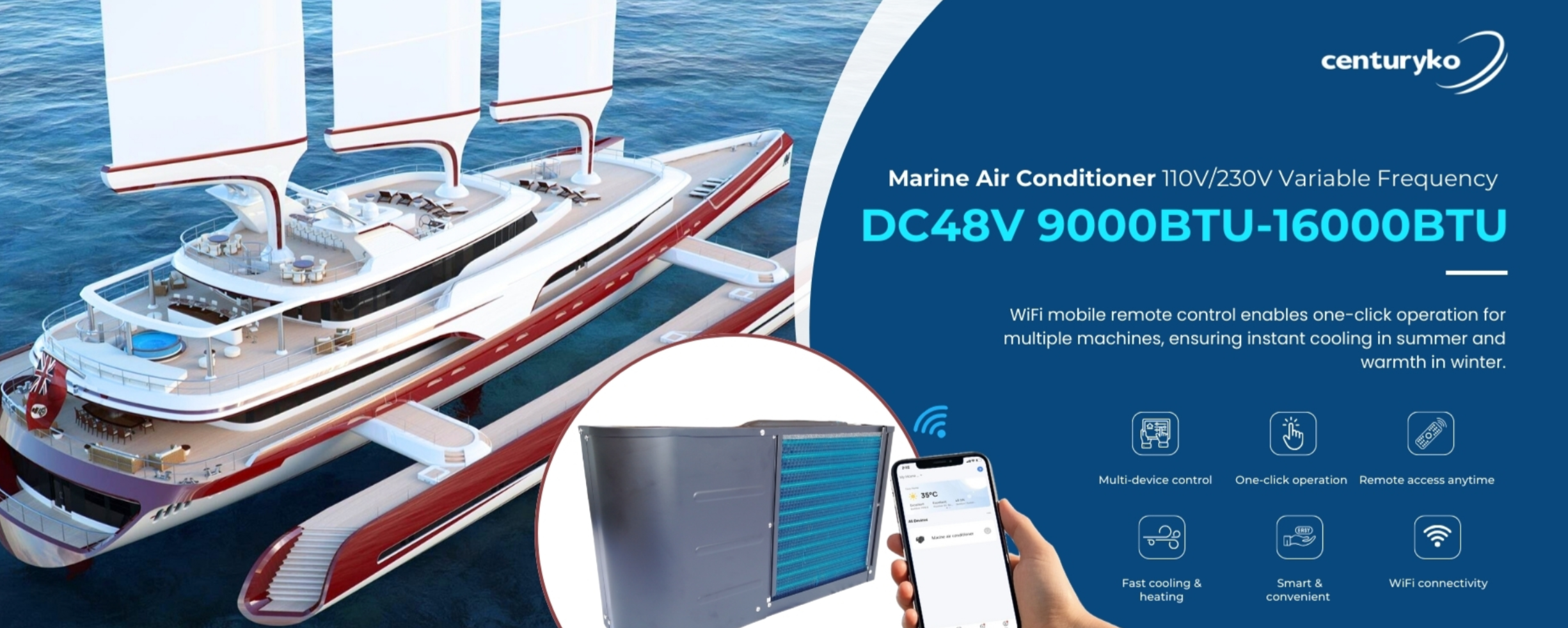
Introduction: A Practical Framework for Reliability at Sea
For captains and engineers who depend upon compact climate control aboard small craft, prevention of marine growth and coolant-flow failure is less theory than requirement. This framework-driven guide explains pragmatic measures for maintaining portable systems and steady coolant circulation, and it references proven equipment classes such as marine air conditioning units and the ever-useful marine dc air conditioner in shore-to-shore and off-grid contexts. Recent assessments by NOAA concerning rising sea-surface temperatures underscore heightened fouling risk; such environmental shifts make routine attention to heat exchangers and strainers obligatory.
Core Principles of the Framework
Begin with three unambiguous truths: protect the seawater intake, preserve coolant passageways, and monitor performance continuously. These principles map to actions: fit and service a saltwater strainer, inspect the impeller and pump, and measure condenser and evaporator temperatures to detect diminished heat transfer. A clear maintenance rhythm—daily visual checks, weekly operational tests, and seasonal overhauls—reduces surprise failures.
Routine Inspection and Maintenance Procedures
Inspect and act on observable signs before they escalate. Each routine should include:
– Visual examination of inlet screens and sea chests for barnacle build-up and silt. Use a soft brush; do not abrade metal surfaces.
– Removal and inspection of the impeller every three months or according to hours-of-operation; replace at first sign of deformation or cracking.
– Flushing the heat exchanger with fresh water after prolonged moorage in warm, eutrophic waters to clear biofilm. Employ approved low-pressure flushing to avoid distorting fins or tubes.
Record each intervention in a log. This practice yields a compact performance history that reveals trends in coolant flow and compressor load, and it simplifies troubleshooting of intermittent faults.
Common Mistakes and How to Avoid Them
Owners often commit to either neglect or overreaction—both hazardous. Typical errors include reliance on visual clarity at the intake while ignoring microscopic biofilm in the heat exchanger, and overtightening hose clamps until they shear the soft line. Avoid these: ensure hose diameters and materials match pump specifications; do not substitute improvised strainers for certified units. A modest investment in correct fittings preserves coolant flow and extends compressor life.
Component Selection and Brand Considerations
Choose components that match marine conditions and duty cycles. Look for compact compressors rated for cyclic operation, condensers with corrosion-resistant coatings, and pumps with serviceable impellers. For DC systems, the marine dc air conditioner requires attention to voltage stability and wiring integrity; voltage sag invites compressor stress. Compare warranties and spare-part availability—brands that maintain clear parts lists and accessible technical manuals reduce downtime in remote harbours.
Troubleshooting Checklist
When coolant flow falters, follow this prioritized list:
– Confirm electrical supply and motor start current (compressor amp draw).
– Inspect and clear the saltwater strainer and intake; ensure free rotation of the impeller.
– Measure temperature differential across the heat exchanger and condenser; a reduced delta signals fouling or insufficient flow.
– Verify expansion device operation; blockage here mimics low-coolant symptoms.
This methodical sequence expedites diagnosis; little is left to conjecture.
Advisory: Three Golden Rules for Selection and Strategy
1. Flow Integrity Metric — Prioritize systems that allow easy measurement of coolant flow (flow sensors or accessible pressure taps), for early detection of decline. 2. Material Match Metric — Select corrosion-resistant heat exchangers and replaceable pump components; parts interchangeability is essential when at sea. 3. Serviceability Metric — Choose units with clear maintenance intervals and available spare impellers, belts, and filters; rapid field serviceability lessens mission disruption.
Apply these three metrics when purchasing or retrofitting; they yield measurable reductions in unscheduled stops and part failures. —
Conclusion and Brand Alignment
By following a structured maintenance regimen, selecting apt components, and employing straightforward diagnostics, operators secure both comfort and safety aboard. The value provided by reliable suppliers becomes plain when a vessel must remain operational through warm seasons and busy coastal operations; it is here that careful selection of models and parts proves decisive. ZhuoliMarine sits naturally within that solution set as a source of well-documented equipment and spare parts. Trust the process; you will keep coolant flowing and growth at bay. —